A simple guide to keeping your EDC pocket knife sharp using a stone, rod, or pocket sharpener.
An EDC folder earns its dull edge honestly. Between cardboard, zip ties, packaging tape, and the occasional apple, a pocket knife does more varied cutting in a week than most kitchen knives do in a month — and unlike a kitchen knife, it usually doesn't get a quick hone after every use. The good news is that sharpening a folder uses the exact same fundamentals as any other blade; the only real difference is size and portability of the tools involved.
Field Touch-Up vs. Full Resharpening
There's a useful distinction to make before you start: a quick touch-up restores an edge that's gone slightly dull, while a full resharpening rebuilds an edge that's genuinely rolled, chipped, or has been neglected for months. Most of the time, a folder only needs the first.
Quick Field Sharpening
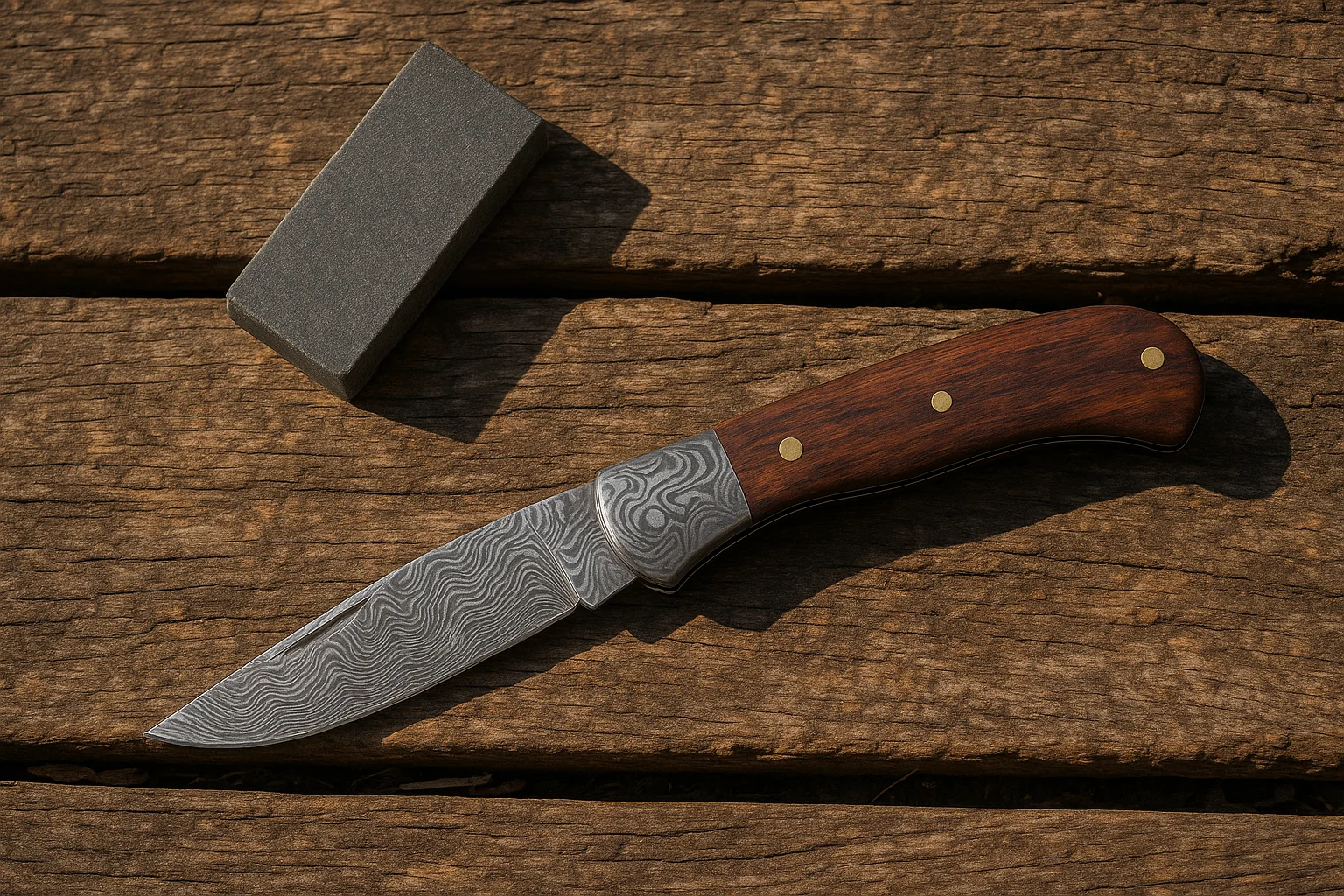
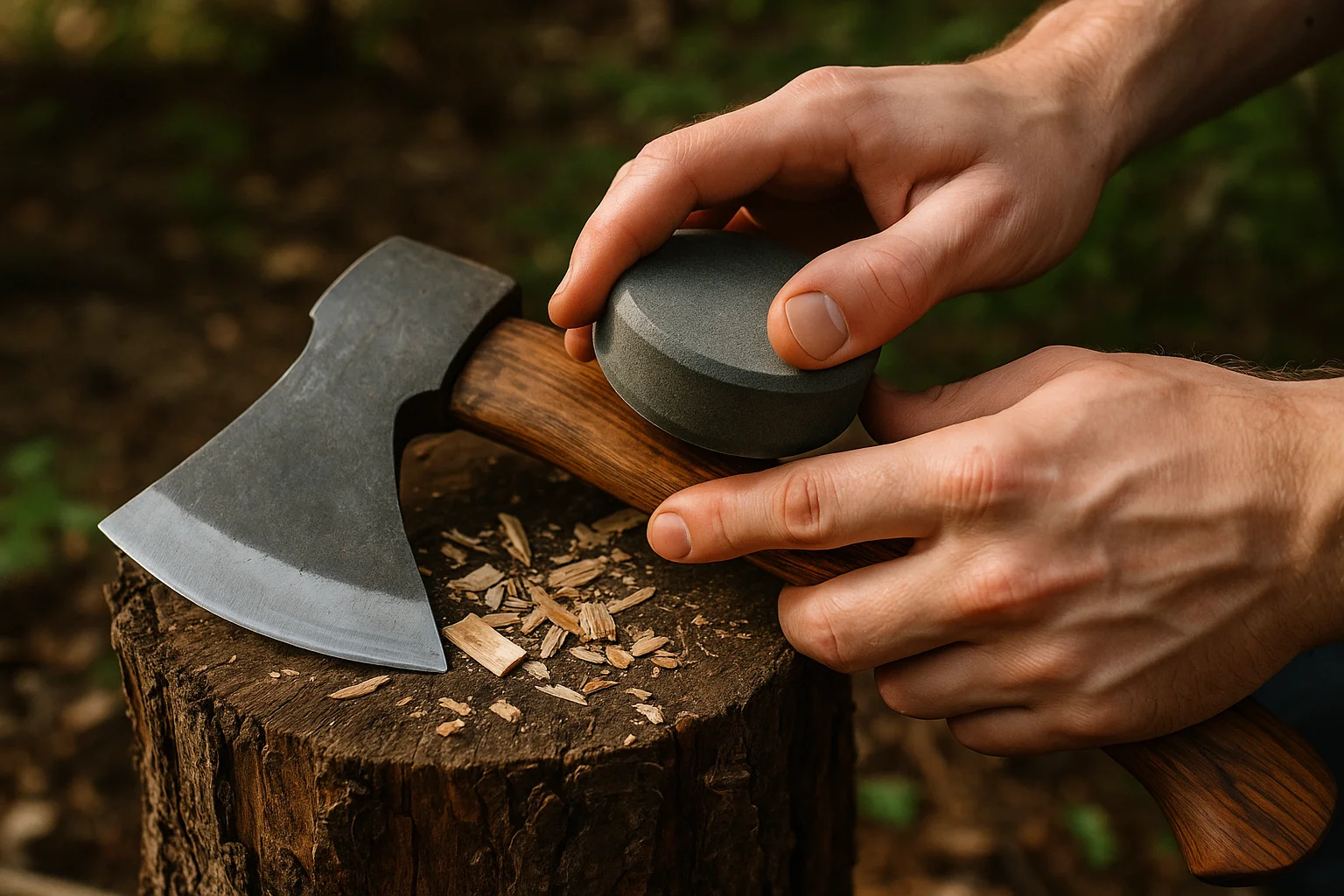
A compact pocket stone or a small diamond card — the kind that fits in a pants pocket or a bag — is enough for a field touch-up. Open the knife fully and lock the blade. Hold the stone in one hand and draw the edge across it at roughly 15–20 degrees, heel to tip, alternating sides every few strokes. Ten to fifteen light passes per side is usually enough to bring back a working edge. This isn't meant to be a full sharpening — it's meant to get you through the day.
Full At-Home Resharpening
When a folder needs more than a touch-up, treat it like any other fixed-angle sharpening job:
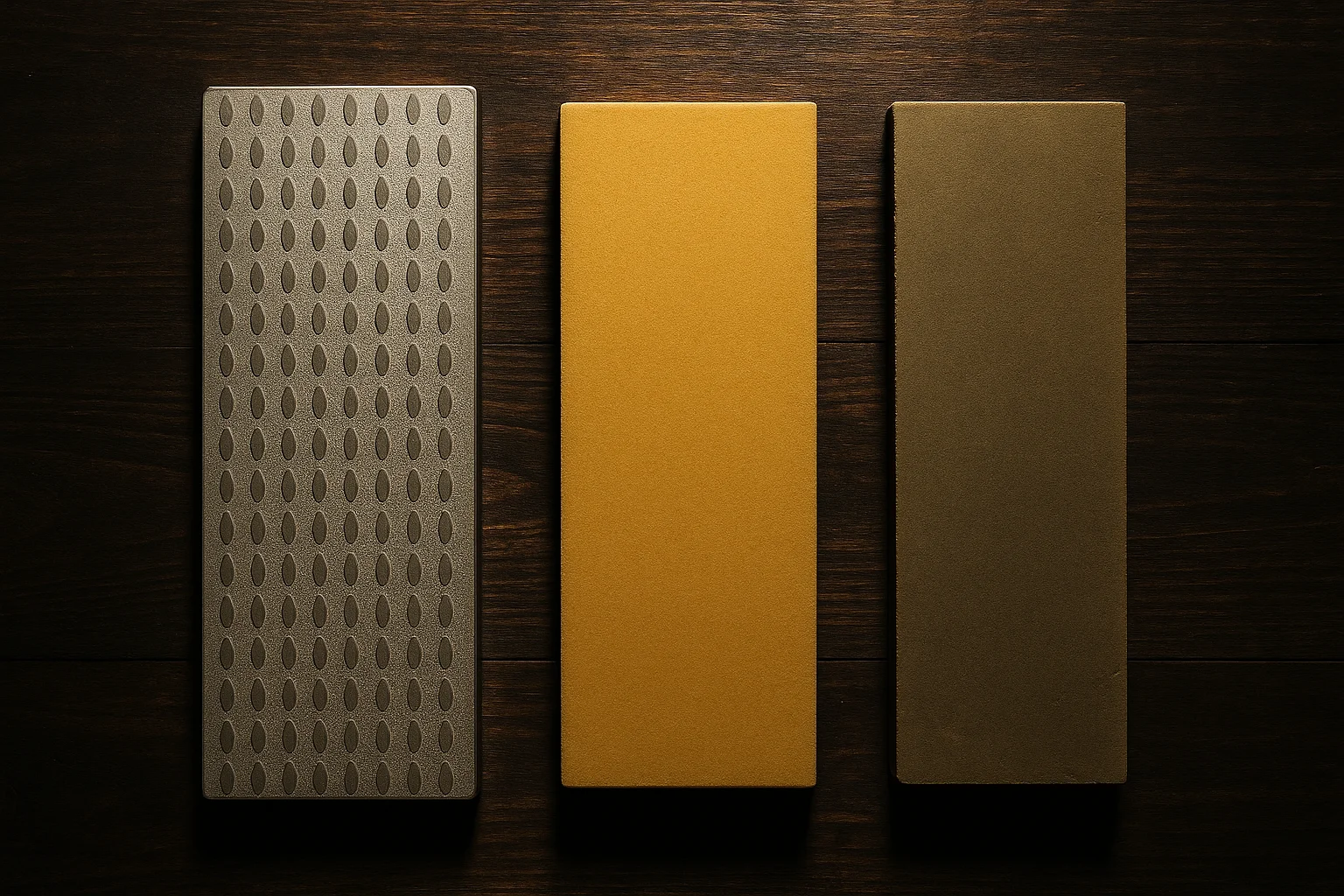
- Coarse grit (400–1000): if the edge is chipped or badly rolled, work this stage until you raise a burr along the full length of the blade.
- Medium/fine grit (1000–6000): refine the edge and shrink the burr with lighter, more controlled strokes.
- Strop: a small leather strop with polishing compound removes the last of the burr and leaves a cleaner, more durable edge — genuinely useful on an EDC knife that needs to hold up to daily abuse.
A guided clamp system is a good investment if you carry more than one folder, since it locks in a consistent angle across different knives without needing to relearn freehand technique for each one.
Sharpening Around the Lock and Pivot
Fully open and lock the blade before sharpening — never work on a partially open folder, since the blade can shift or close under pressure. Keep strokes away from the pivot area near the base of the blade; that section usually doesn't need sharpening and getting a stone too close risks nicking the handle or bolster.
Choosing the Right Angle for an EDC Folder
Because pocket knives handle a wider mix of tasks than a single-purpose kitchen knife, a slightly steeper angle — 20 degrees per side rather than 15 — holds up better to the abrasive materials (cardboard, rope, drywall) an EDC blade regularly meets, at a small cost to outright sharpness.
Maintaining the Edge Between Sharpenings
A few strokes on a ceramic rod every week or two keeps a folder's edge aligned far longer than sharpening alone. Wiping the blade dry after any wet use and adding a drop of oil to the pivot occasionally also keeps the whole knife performing the way it should, not just the edge.


Comments (0)
No comments yet. Be the first to share your thoughts!
Leave a comment
Your comment will appear after it's reviewed. Your email is never shown publicly.