

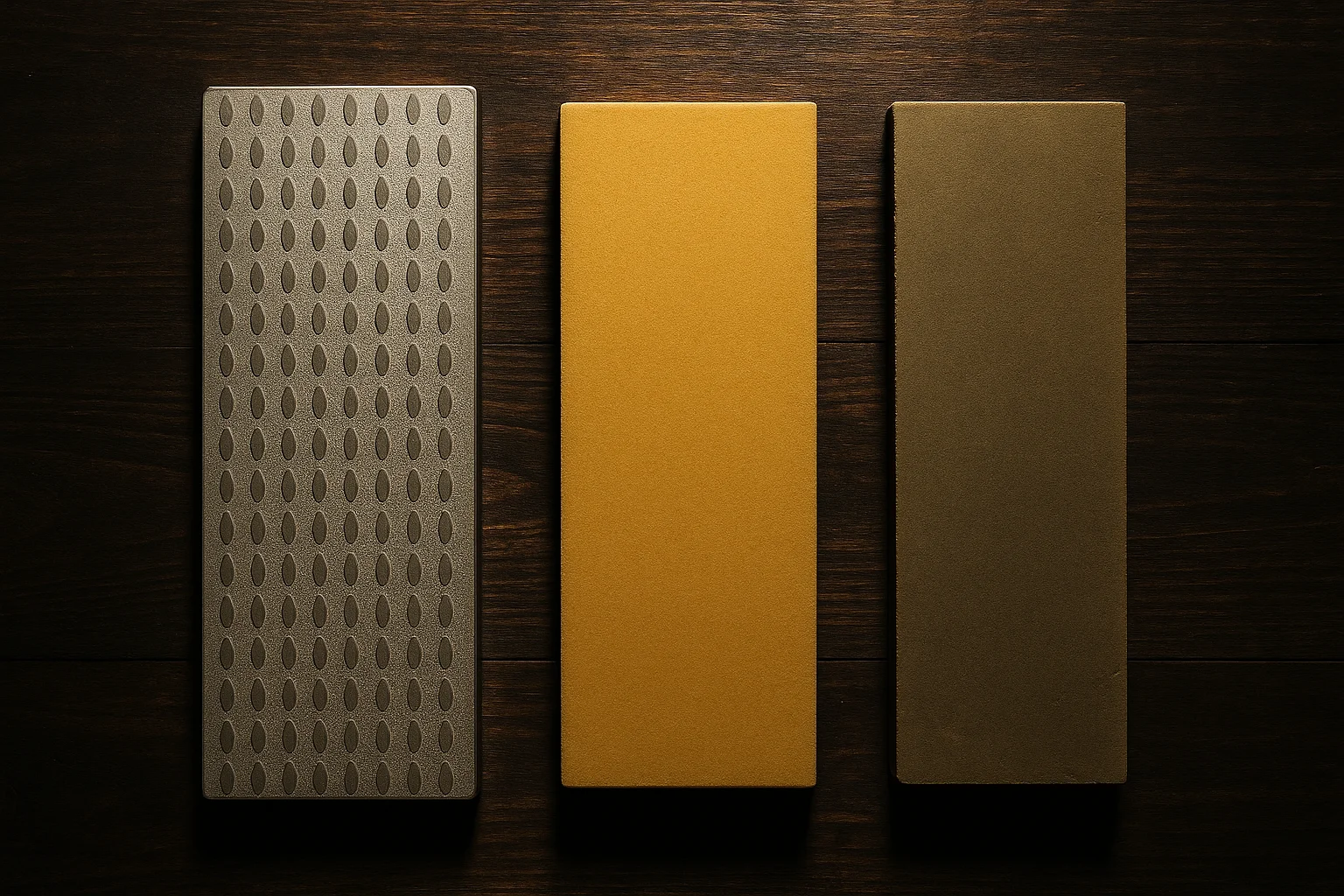
Diamond, water, and oil stones all sharpen a knife, but they get there differently, and the right choice depends more on how often you'll sharpen and what knives you own than on which one is objectively "best." Here's how the three compare.
Diamond Stones
Diamond stones use a metal plate embedded with actual diamond particles rather than a bonded abrasive material. They cut fast, work dry or with a small amount of water (no oil needed), and — critically — never wear into a dish shape the way traditional stones do, so they never need flattening.
Best for: anyone who wants speed and low maintenance, sharpening very hard steels, or sharpening ceramic blades, which only diamond abrasives can touch. Trade-off: typically the most expensive option, and the aggressive cut can remove more metal than necessary if not used with a light touch.
Water Stones (Whetstones)
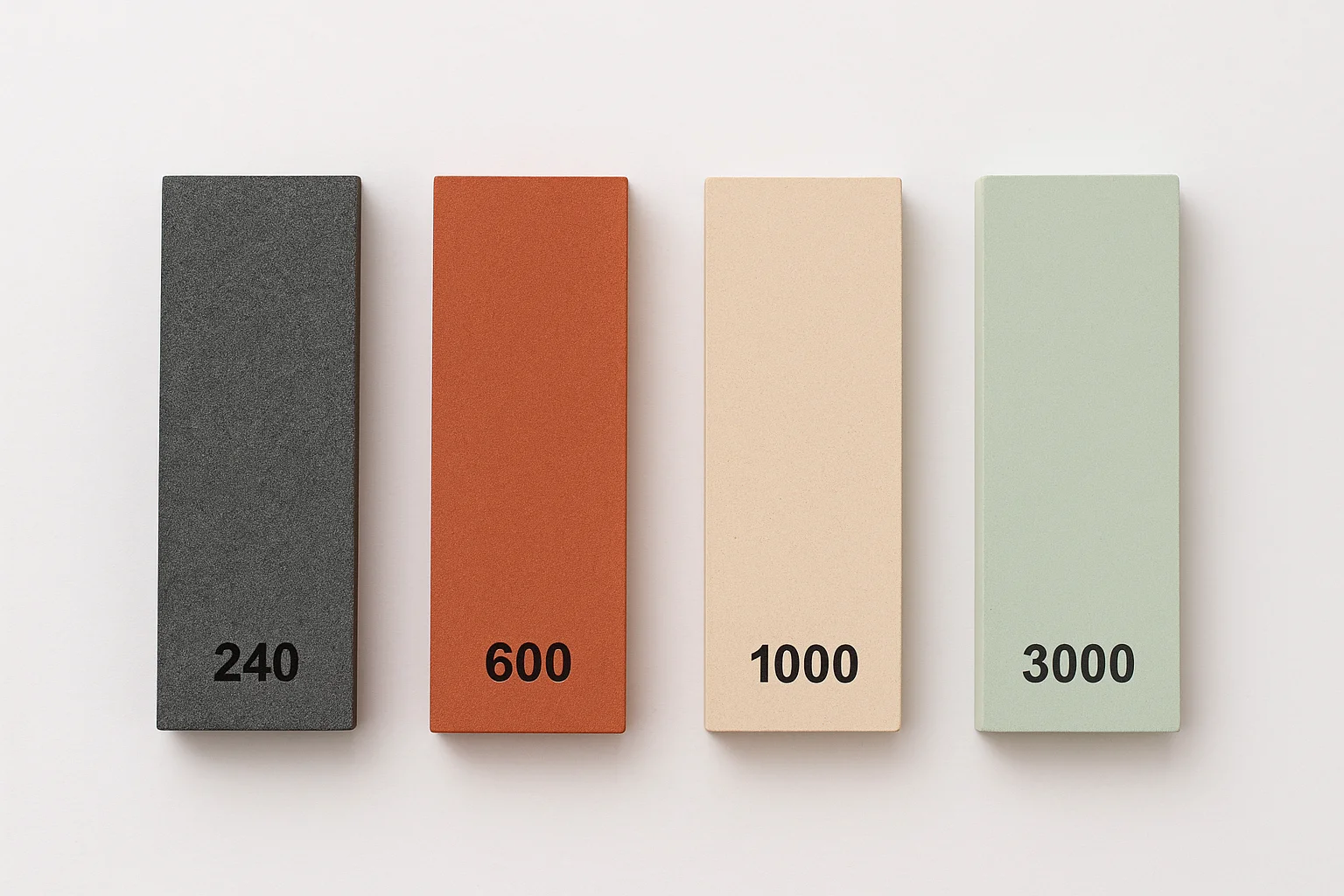
The traditional choice for the finest control and the sharpest possible edge, especially for Japanese-style knives. They need soaking before use and periodic flattening as they wear, but the range of available grits — from coarse repair stones to ultra-fine polishing stones — is unmatched by the other two types.
Best for: anyone serious about getting the sharpest possible edge, especially on thin, precise blades. Trade-off: more setup and maintenance (soaking, flattening) than diamond or oil stones.
Oil Stones
Older technology, still widely used for its low-maintenance simplicity — no soaking required, just a few drops of honing oil before use. Oil stones cut more slowly than water or diamond stones and generally can't match the fine polish a good water stone can achieve, but they're durable, inexpensive, and forgiving for beginners.
Best for: low-maintenance routine sharpening without wanting to deal with soaking or flattening. Trade-off: slower cutting speed and a lower sharpness ceiling than water or diamond stones.
Quick Comparison
- Fastest cutting: diamond
- Sharpest possible edge: water stone
- Lowest maintenance: diamond (no flattening) or oil (no soaking)
- Best value for beginners: oil stone or a mid-range water stone combination
- Works on ceramic blades: diamond only
What to Look For Regardless of Type
- Size: a stone at least 7–8 inches long lets you use full-length strokes on most kitchen knives without running out of surface.
- Two grits in one stone: a combination stone (medium on one side, fine on the other) covers more ground without buying multiple stones.
- A stable base: a non-slip holder or stand matters as much as the stone itself for getting a consistent angle.
Matching a Stone to Your Knife Collection
If most of your knives are Damascus or high-carbon kitchen knives you care about keeping in top form, a water stone combination set gives the best long-term results. If you're maintaining a mixed collection including outdoor and pocket knives that see rougher use, a diamond stone's speed and durability make more practical sense. And if you just want something simple that works without much fuss, an oil stone remains a genuinely solid, low-effort choice.
Comments (0)
No comments yet. Be the first to share your thoughts!
Leave a comment
Your comment will appear after it's reviewed. Your email is never shown publicly.