A dull hatchet is more dangerous than a sharp one — here's how to restore a clean chopping edge.
A dull hatchet is genuinely more dangerous to use than a sharp one — it takes more force to make the same cut, and that extra force is exactly what causes a hatchet to glance off a log at an odd angle instead of biting in cleanly. Sharpening one is a different process from sharpening a knife, mostly because of the convex edge grind most hatchets use.
Why a Hatchet Edge Is Different From a Knife Edge
Most knives use a flat (or slightly hollow) bevel ground at a consistent angle. A hatchet typically has a convex edge — a gently rounded curve from the edge back into the body of the head — which adds strength behind the edge for repeated impact against wood. Sharpening a convex edge means working in a rolling, rounded motion rather than holding one fixed flat angle the whole time.
What You'll Need
- A flat mill file, for reshaping a damaged or badly rolled edge.
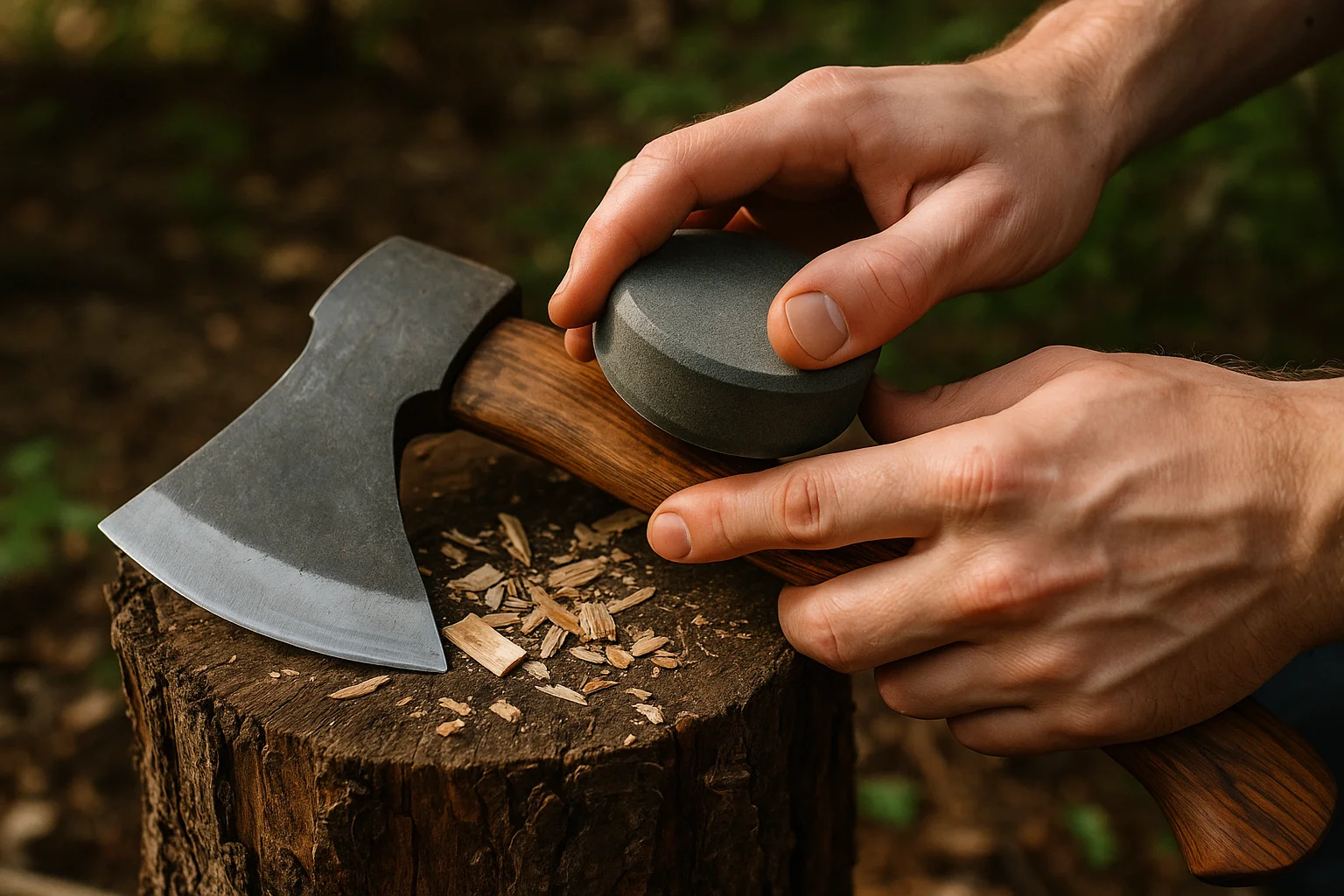
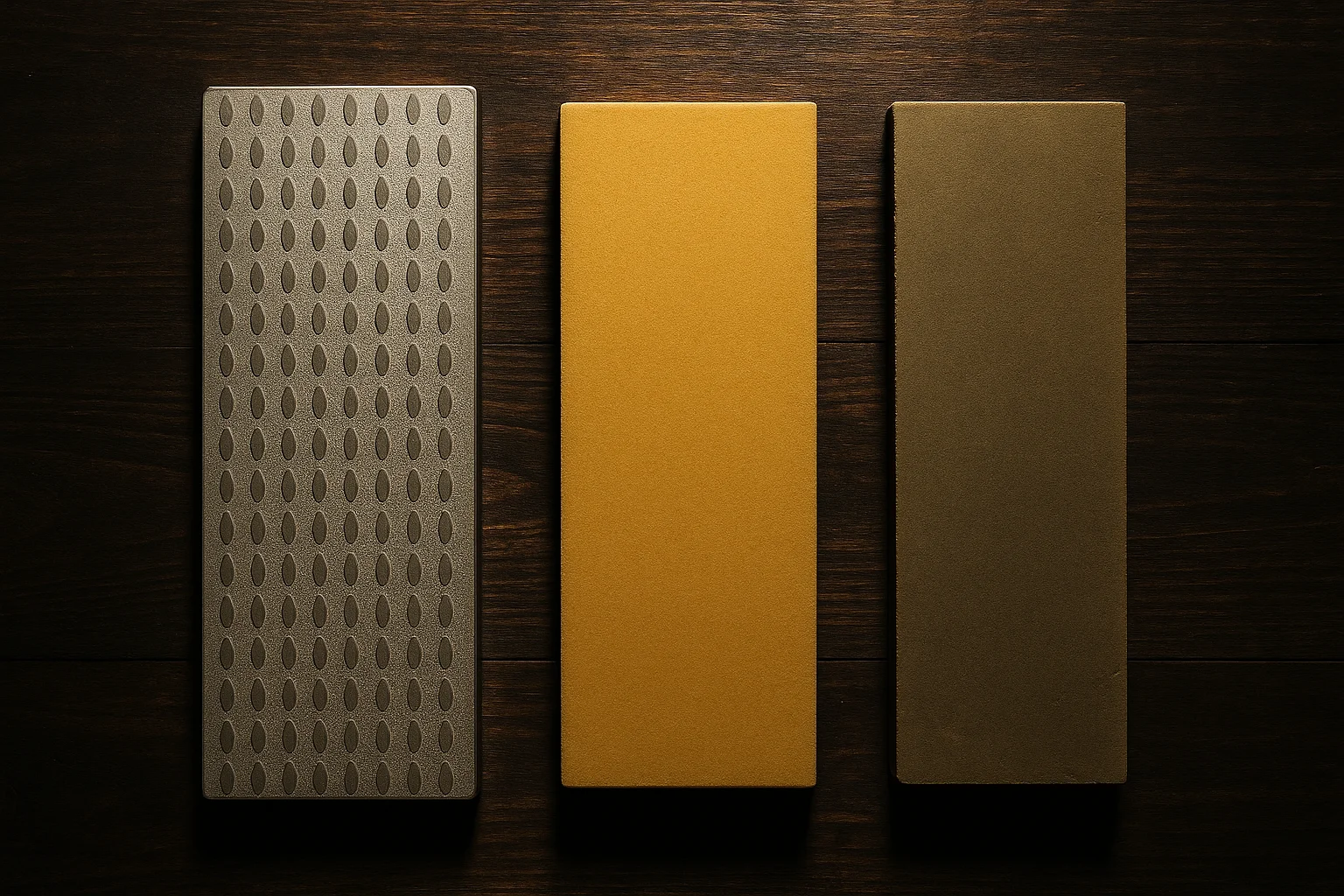
- A round sharpening puck stone (often with a coarse and fine side), for the final edge.
- Light oil, for lubricating the puck stone during use.
- A vise or clamp to hold the head steady, if available.
Step 1: Inspect the Edge
Look along the edge under good light for chips, rolls, or flat spots. A hatchet that's just lost some sharpness from normal use can often skip straight to the puck stone; one with visible damage needs the file stage first.
Step 2: File Out Major Damage
Secure the head, and draw the file across the edge in smooth, even strokes, following the existing convex curve rather than trying to flatten it. Work from the edge back into the bevel, alternating sides, until chips and rolls are filed out and the edge looks even along its full length.
Step 3: Refine With the Puck Stone
Apply a few drops of oil to the coarse side of the puck. Holding the stone flat against the curved bevel, work it in small, overlapping circular motions, following the convex curve of the edge rather than holding a single fixed angle. Move along the entire length of the edge, alternating sides evenly.
Step 4: Finish on the Fine Side
Switch to the puck's fine side (or a second, finer stone) and repeat the same circular motion with lighter pressure, polishing out the coarser scratches and refining the edge to its final sharpness.
Step 5: Check the Edge Is Even
Run a thumb (carefully, across the edge, never along it) to feel for consistency along the whole length — no flat spots, no leftover chips, no section that feels noticeably duller than the rest.
A Simple Test
A properly sharpened hatchet should be able to shave a curl of wood off a piece of kindling with light pressure, or cleanly slice through paper. If it's tearing or skating instead of biting, more work is needed on the puck stone.
Maintaining the Edge Between Sharpenings
A quick pass with just the puck stone's fine side before a camping trip or heavy use keeps the edge in good shape far longer than sharpening only when it's already struggling to cut. Wiping the head dry and applying a light coat of oil after use also prevents rust from taking hold on carbon steel heads.


Comments (0)
No comments yet. Be the first to share your thoughts!
Leave a comment
Your comment will appear after it's reviewed. Your email is never shown publicly.