

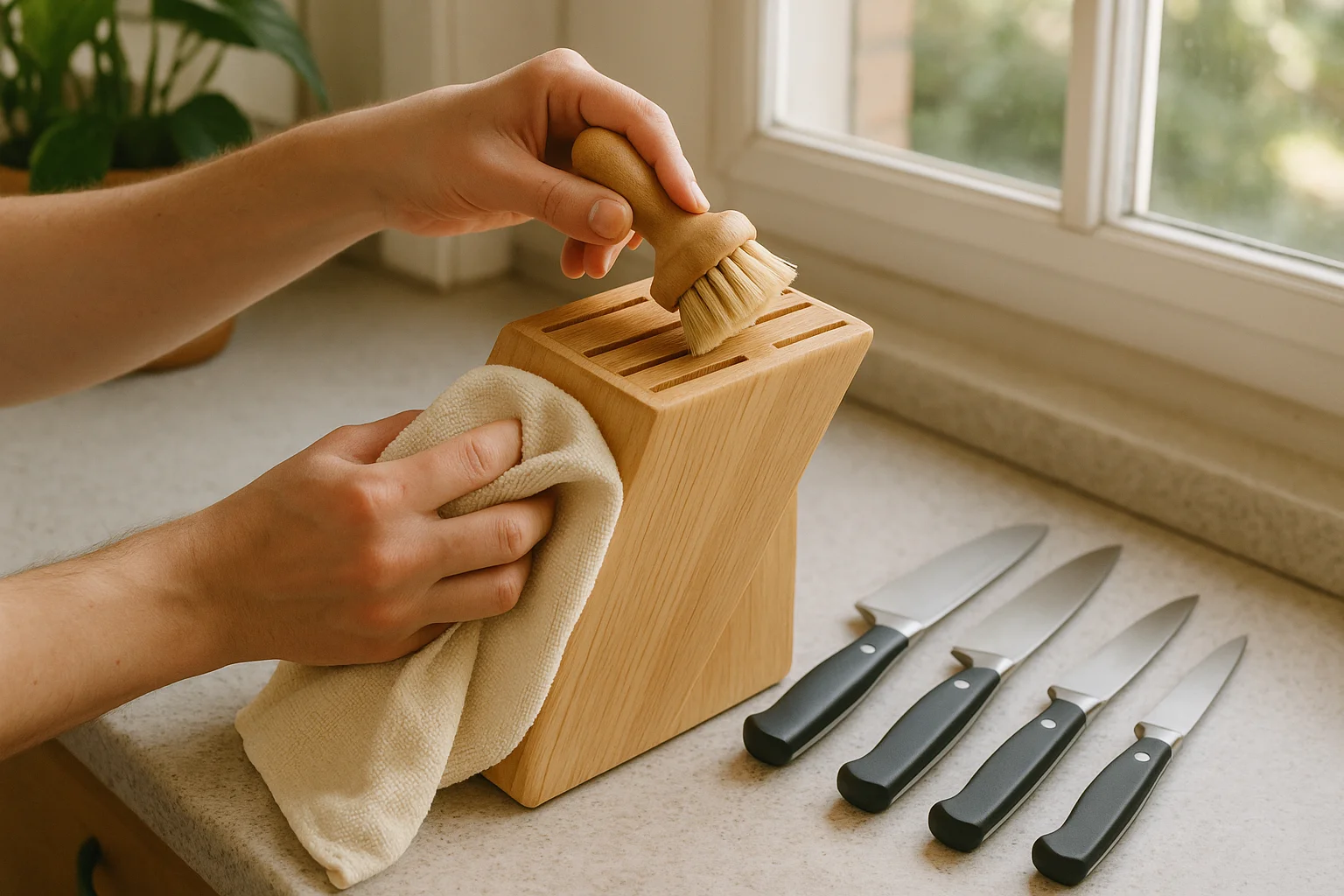
A knife block's narrow slots are exactly the kind of space that's easy to ignore — too tight to wipe out with a normal cloth, and out of sight until something starts to smell off or a fine layer of crumbs falls out when you pull a knife free. A few minutes of regular cleaning keeps it from becoming a hidden source of moisture, mold, and dull edges.
Why Knife Blocks Need Regular Cleaning
Every time a knife goes back into its slot, it carries in whatever's left on the blade — food residue, oil, and moisture from washing. Over time this builds up inside the narrow slots where it's hard to see and even harder to reach, creating conditions for mold and bacteria, and leaving a gritty residue that can dull an edge slightly with every insertion.
What You'll Need
- A narrow bottle brush, pipe cleaner, or a folded piece of cloth wrapped around a butter knife or chopstick.
- A dry vacuum attachment (small nozzle or crevice tool), if available.
- Mild dish soap and warm water.
- A soft, dry cloth.
Step-by-Step Cleaning
1. Remove All Knives and Empty Loose Debris
Pull every knife out and turn the block upside down over a sink or trash can, tapping gently to dislodge crumbs and dust that have settled at the bottom of each slot.
2. Vacuum the Slots
A narrow crevice attachment reaches deeper into each slot than a brush alone and pulls out fine debris that's settled at the bottom.
3. Brush or Wipe Each Slot
Wrap a slightly damp cloth around a chopstick or butter knife (or use a bottle brush sized to fit) and work it into each slot to loosen and lift any residue stuck to the interior walls. Avoid soaking the block — wood knife blocks in particular can warp or crack if they absorb too much water.
4. Wipe the Exterior
Clean the outside of the block with a damp cloth and mild soap, then dry immediately. Avoid submerging a wood block in water or running it through a dishwasher.
5. Dry Completely Before Reinserting Knives
Let the block air-dry fully — ideally overnight — before putting knives back in. Reinserting knives into a damp block traps moisture against the blades, which is a common hidden cause of rust spots near the heel of a knife.
Preventing Buildup Going Forward
- Always dry knives completely before returning them to the block.
- Wipe the blade of any visible food residue before inserting it, not just after washing.
- Give the block a quick once-over every few weeks rather than waiting for a deep clean to become necessary.
When to Replace a Knife Block
If a wood block has developed a persistent musty smell that cleaning doesn't resolve, or visible mold has taken hold inside slots that are too narrow to fully reach, it's usually more practical to replace it than to keep trying to salvage it — a knife block is a relatively small investment compared to the knives it's meant to protect.

Comments (0)
No comments yet. Be the first to share your thoughts!
Leave a comment
Your comment will appear after it's reviewed. Your email is never shown publicly.