

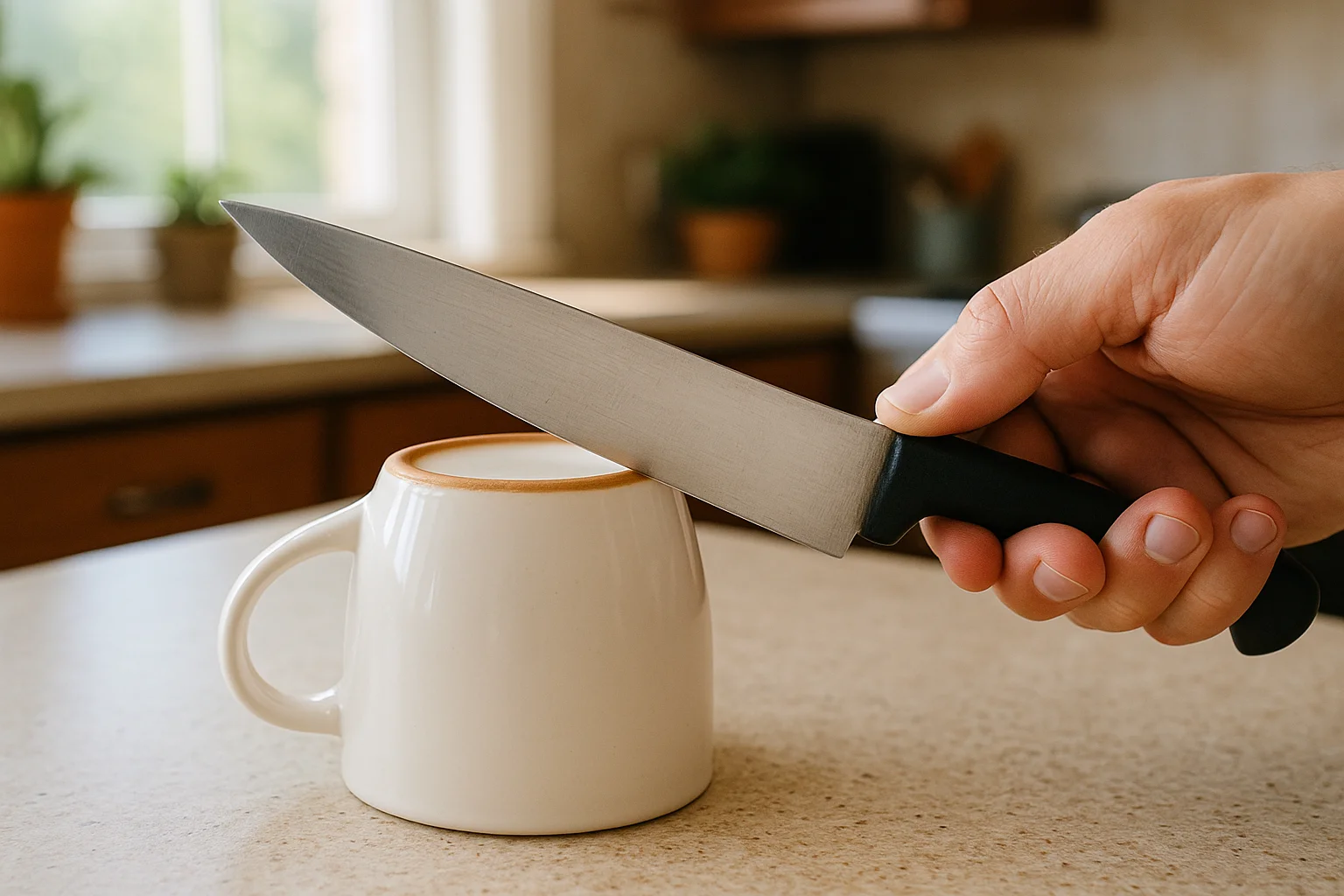
Nobody plans to run out of a sharp knife mid-recipe, but it happens — and when it does, you don't necessarily need a stone or a sharpener sitting in a drawer somewhere. A handful of everyday household items can restore a working edge in a pinch, though none of them replace a proper sharpening stone for the long term.
The Ceramic Mug Trick
The unglazed ring on the bottom of most ceramic mugs and plates is a genuinely abrasive surface, similar in texture to a fine sharpening stone. Flip the mug over, hold the blade at roughly a 15–20 degree angle against the unglazed ring, and draw it across in smooth, even strokes, alternating sides. It won't produce a razor edge, but it will restore a knife's ability to cut cleanly again.
Another Knife's Spine
The flat back edge (spine) of another sturdy knife can work as an improvised honing rod. Hold the spine of the second knife roughly vertical and draw the dull blade's edge down and across it at your normal sharpening angle, alternating sides. This won't sharpen a genuinely dull knife, but it can realign a slightly rolled edge in a pinch, similar to a honing rod.
Concrete or a Rough Stone
Outdoors, an unglazed concrete step, a flat sidewalk slab, or a naturally rough, flat rock can serve as an emergency coarse sharpening surface. The technique is the same as a whetstone — consistent angle, light pressure, alternating sides — though the surface is far less controlled than an actual stone, so expect a rougher result.
Sandpaper Over a Flat Surface
If you have sandpaper — even 220–400 grit from a toolbox — wrapping it tightly around a flat block of wood or a book creates a workable improvised stone. Work through progressively finer grits if you have more than one, the same way you would on a real stone, for a noticeably better result than a single coarse grit alone.
The Limits of These Methods
None of these substitutes match a real whetstone's consistency, and repeated use of a rough surface like concrete can leave a coarser, less durable edge than proper sharpening equipment. Think of these as emergency fixes to get through a meal or a task, not a long-term replacement for a proper sharpening stone or system.
When to Reach for the Real Thing
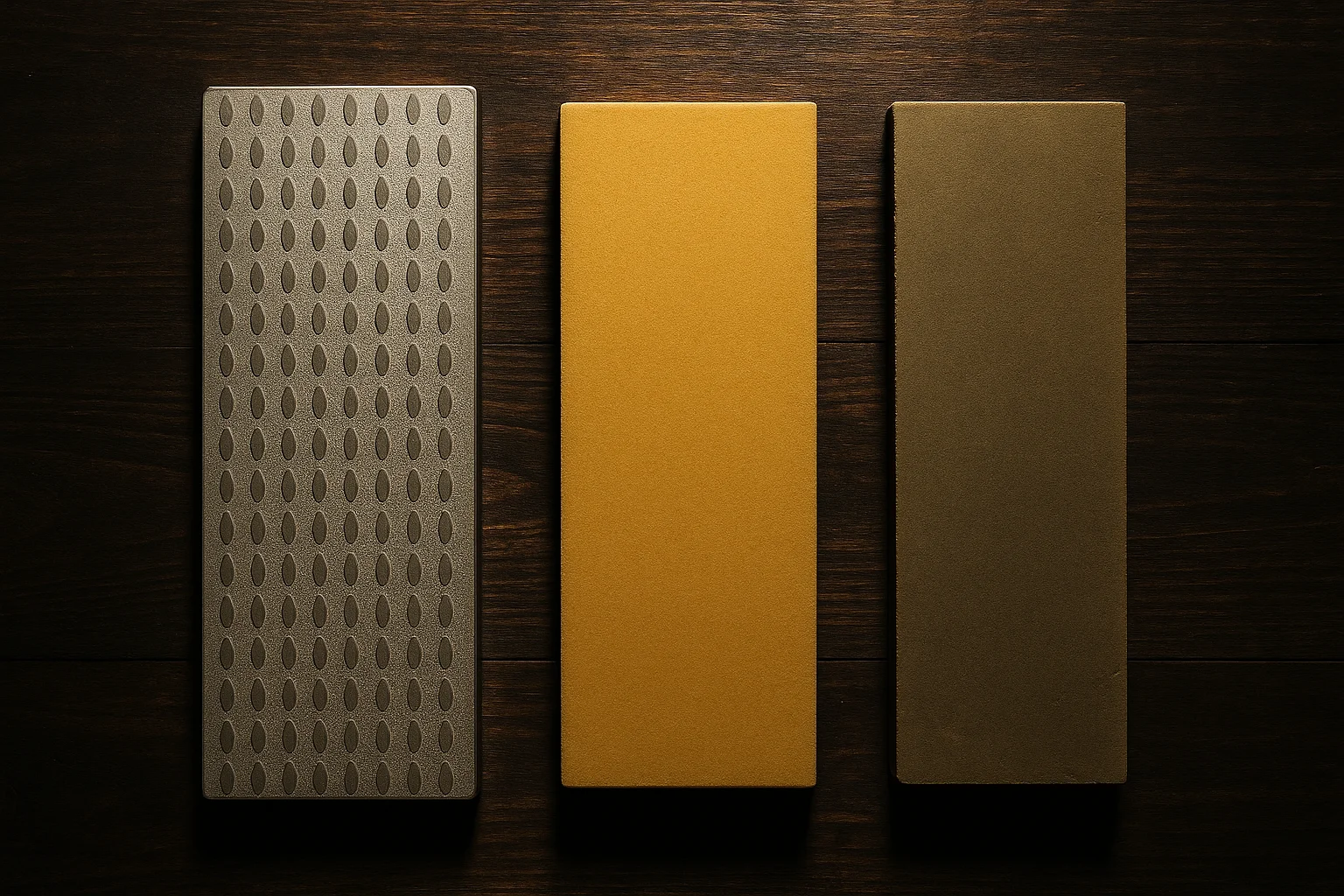
If a knife is regularly going dull enough to need these tricks, it's worth investing in a basic whetstone or guided sharpener — even an inexpensive combination stone will outperform every household substitute and last for years of regular use.
Comments (0)
No comments yet. Be the first to share your thoughts!
Leave a comment
Your comment will appear after it's reviewed. Your email is never shown publicly.