Bread knives need special care — here's the right way to sharpen a serrated bread knife without losing the scallop pattern.
A bread knife's wide, deep serrations look intimidating to sharpen, but the technique is really just the serrated-knife method applied to a longer blade with wider scallops. The tool and motion don't change from scallop to scallop — there are just more of them to work through.
Why Bread Knives Rarely Need Sharpening
Before reaching for a tool, it's worth checking whether the knife actually needs sharpening at all. Because bread knives cut mostly soft, low-resistance foods — bread, cake, tomatoes, melon — the serrations dull far more slowly than a straight-edge kitchen knife used on denser ingredients daily. Many home bread knives go a year or more before a real sharpening is necessary.
What You'll Need
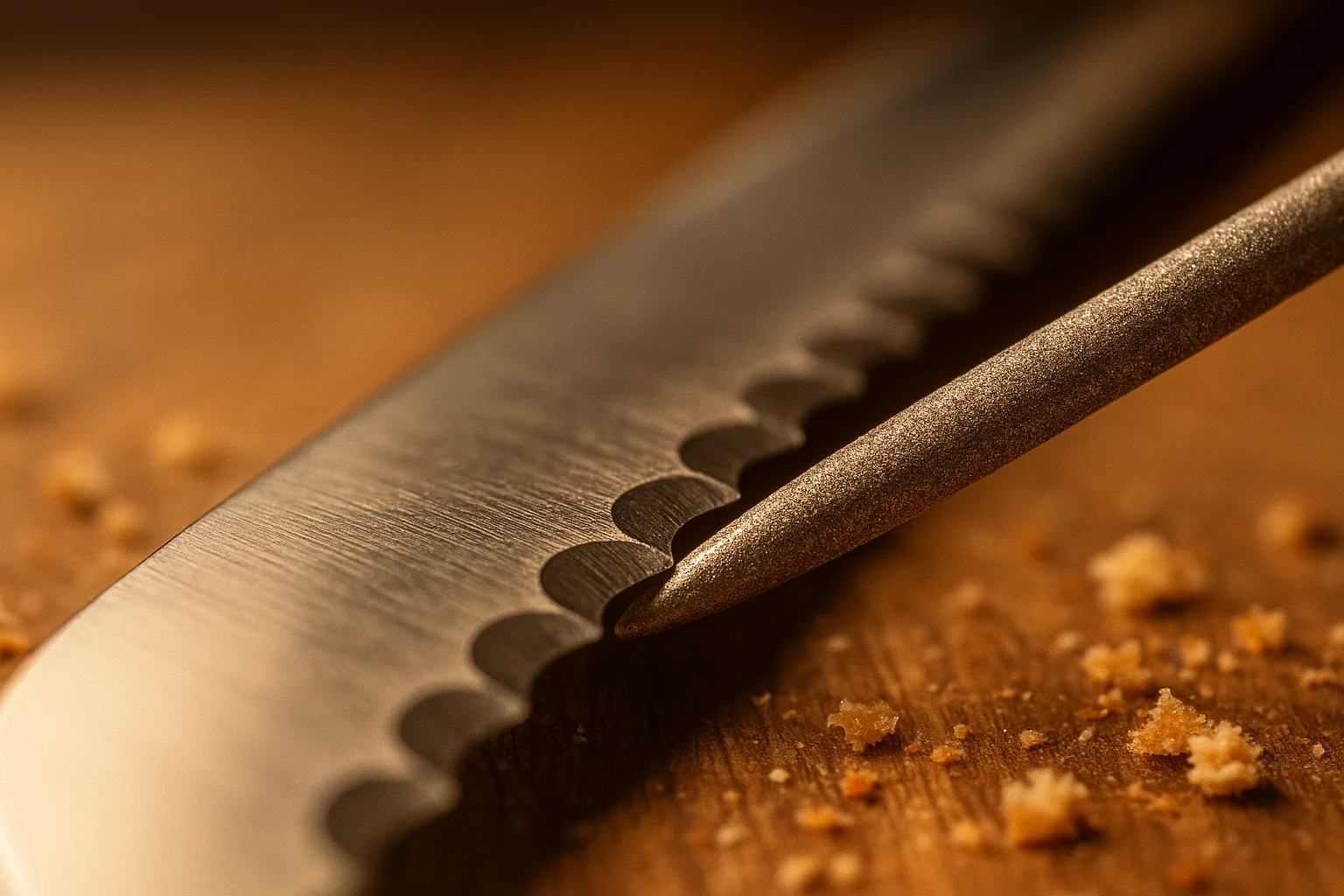
A tapered round or half-round diamond sharpening rod, sized to fit inside the scallops of a typical bread knife (these tend to be wider than a serrated steak knife's grooves, so a slightly thicker rod usually works well).
Step-by-Step
1. Find the Beveled Side
Most bread knives are ground on one side only. Feel along both faces near the edge — the beveled side angles inward toward the edge; the flat side is straight. Only the beveled side gets sharpened.
2. Work Scallop by Scallop
Starting at the heel, fit the rod into the first scallop's curve at roughly the existing bevel angle (usually 15–20 degrees). Draw the rod through the groove in a single stroke that follows its curve, from inside the scallop outward. Repeat 3–5 times per scallop.
3. Move Down the Blade
Work heel to tip, one scallop at a time, keeping pressure and stroke count consistent so every groove gets even attention.
4. Deburr the Flat Side
Lay the unbeveled side nearly flat against a fine stone or the smooth side of a rod and make one or two very light passes to clear any burr, without actually grinding that side.
5. Test on Bread
A properly sharpened bread knife should saw through a crusty loaf cleanly, without tearing the crust or crushing the soft crumb inside.
Keeping the Scallop Pattern Intact
The biggest risk with sharpening a bread knife is over-grinding one or two scallops more than the rest, which creates an uneven cutting surface. Keep your stroke count consistent scallop to scallop, and resist the temptation to keep working a stubborn spot far longer than the others — a few extra light passes are better than a dramatically deeper groove in one spot.
When to Have It Professionally Sharpened
If the serration pattern has become visibly uneven from past sharpening, or several scallops are chipped, a professional sharpening service with dedicated serrated-wheel equipment can restore a more even edge than most home attempts.


Comments (0)
No comments yet. Be the first to share your thoughts!
Leave a comment
Your comment will appear after it's reviewed. Your email is never shown publicly.