Get a mirror-polished, hair-splitting edge by learning how to strop a knife with a leather strop and compound.
Stropping is the step most home sharpeners skip, and it's the one that separates a merely sharp edge from one that genuinely splits hair. It's not a substitute for sharpening — a strop can't fix a dull blade — but as the final polishing stage after a stone, it removes the last microscopic burr and aligns the very apex of the edge in a way no stone alone quite manages.
What a Strop Actually Does
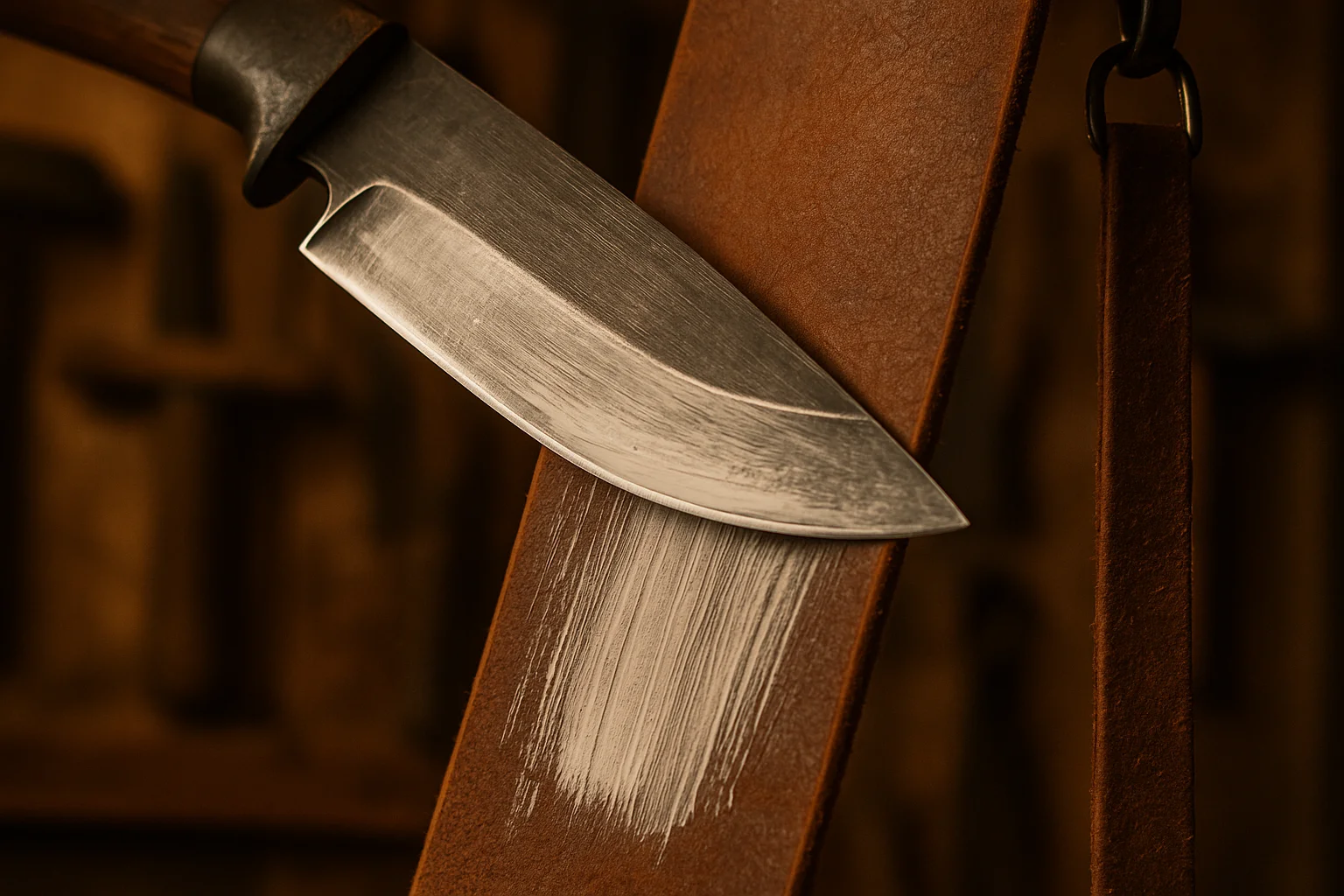
A leather strop loaded with a fine abrasive compound works the opposite direction from sharpening: instead of grinding into the edge, you draw the blade backward, spine-leading, so the leather burnishes and polishes the very tip of the edge rather than cutting into it. Done correctly, it removes the last wisp of the burr left over from stone work and leaves a smoother, more refined edge.
What You Need
- A leather strop — a simple flat paddle or a hanging strap both work.
- A fine polishing compound (often a green or white chromium oxide bar), rubbed into the leather to load it with abrasive.
Loading the Strop
Rub the compound bar across the leather in firm, even strokes until a thin, even layer builds up on the surface. You don't need a thick coating — a light, consistent film does the job, and reapplying a small amount every few sessions keeps it working.
The Stropping Stroke
This is the part people get backward the first time: unlike sharpening, where you push the edge forward into the stone, stropping is done trailing-edge — spine leading, edge trailing behind. Lay the blade flat against the leather at your sharpening angle, then draw it backward toward you, from heel to tip, lifting slightly to maintain the angle as the curve of the blade passes under your hand. Flip and repeat on the other side. Sharpening forward into a strop will cut into the leather and can actually dull the edge instead of refining it.
How Many Passes
10–20 light passes per side is typical. Unlike sharpening, more passes on a strop rarely hurt — the abrasive is fine enough that you're polishing, not grinding — but there's a point of diminishing returns once the edge stops improving.
Fitting Stropping Into a Full Sharpening Routine
The order matters: coarse grit to repair, medium grit to build the bevel, fine grit to refine, then strop last to finish. Skipping straight to a strop on a dull blade won't sharpen it — there's no abrasive on a strop coarse enough to remove real metal, only to polish what's already been properly ground.
Maintaining an Edge With Just a Strop
Between full sharpenings, a quick strop session — even without a fresh trip to the stone — can extend how long an edge stays at its best, similar to honing but with a polishing effect on top. Many people keep a strop by the cutting board for exactly this reason.


Comments (0)
No comments yet. Be the first to share your thoughts!
Leave a comment
Your comment will appear after it's reviewed. Your email is never shown publicly.