

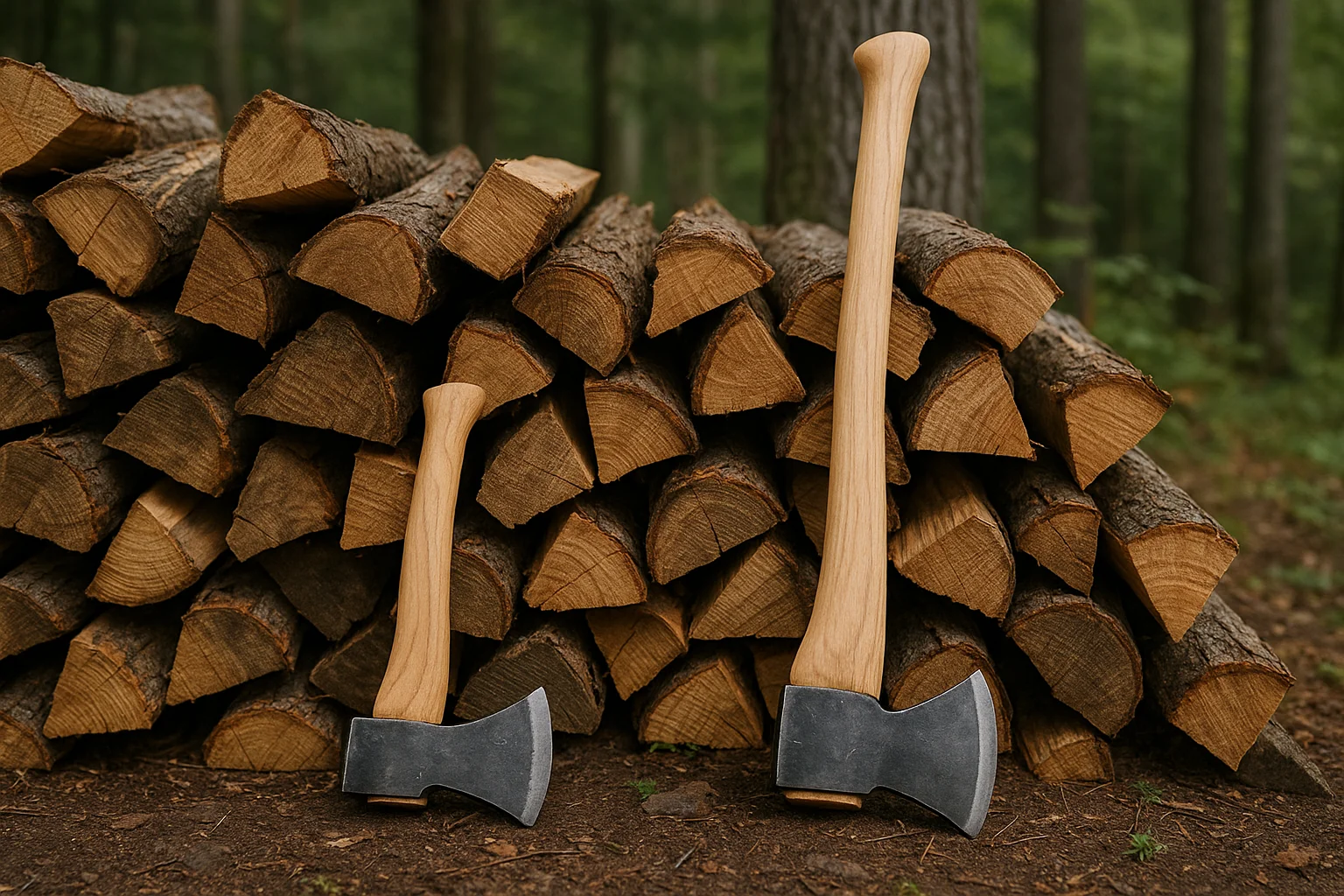
"Hatchet" and "axe" get used almost interchangeably in casual conversation, but they're built for genuinely different jobs — and picking the wrong one for the task at hand means either struggling with a tool that's too small or fighting the weight of one that's too large.
The Core Difference: Size and Grip
A hatchet is a compact, one-handed tool, typically 12 to 18 inches overall with a lighter head, designed to be swung with one arm for shorter, more controlled strokes. An axe is significantly longer — often 24 to 36 inches or more — swung two-handed with a longer arc that generates far more cutting power per swing.
What a Hatchet Is Built For
- Kindling and small wood processing: splitting small pieces down to fire-starting size.
- Light chopping: small branches, light limbing work.
- Camp tasks: driving tent stakes, general light utility work around a campsite.
- Portable, one-handed use: ideal when pack weight and one-handed operation matter more than raw power.
What an Axe Is Built For
- Felling trees: the long handle and heavy head generate the power needed to cut through substantial trunks.
- Splitting larger logs: a full two-handed swing delivers far more force than a hatchet can manage.
- Heavy, sustained wood processing: when you're processing a significant volume of firewood rather than a handful of kindling pieces.
Choosing Between Them
- Camping and backpacking: a hatchet's compact size and lighter weight usually win out, given limited pack space and the smaller-scale tasks typical of a camp setting.
- Serious firewood processing or felling: an axe is genuinely necessary — a hatchet simply can't generate the power for larger trunks and sustained splitting.
- Bushcraft and general outdoor utility: a hatchet's versatility across a range of smaller tasks, plus its portability, makes it the more common choice for general outdoor kits.
Do You Need Both?
For anyone doing serious homesteading or regularly processing significant amounts of firewood, both tools genuinely earn their place — the axe for the heavy felling and splitting work, the hatchet for kindling and portable camp use. For casual camping or general outdoor use, a good hatchet alone usually covers the practical needs most people actually have.
Care and Sharpening
Both tools use similar convex-edge sharpening technique, generally with a file to address any damage and a round puck stone for the final edge — the core difference in maintenance comes down to the axe's larger surface area requiring more time to work through the same process, not a fundamentally different technique.

Comments (0)
No comments yet. Be the first to share your thoughts!
Leave a comment
Your comment will appear after it's reviewed. Your email is never shown publicly.