

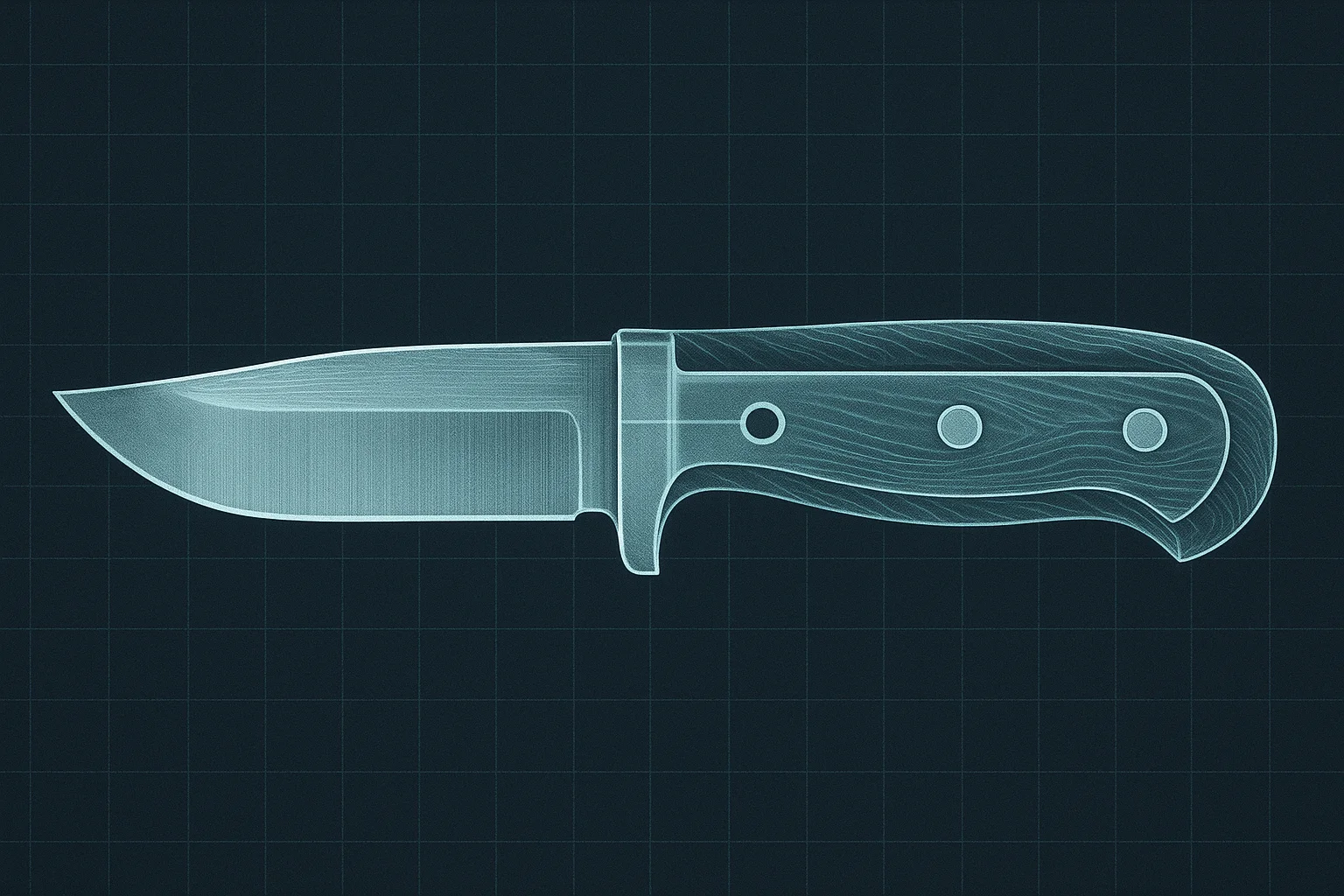
Tang construction is one of those specs that sounds technical but has a very direct, practical effect on how a knife performs — specifically, how strong it is under stress and how the weight balances in your hand. Understanding the difference between full tang and hidden tang is genuinely useful before buying any fixed-blade knife.
What "Tang" Means
The tang is the portion of the blade's steel that extends back into the handle, rather than the visible cutting portion of the blade. How much of that steel runs through the handle, and how it's shaped, is what "tang construction" refers to.
Full Tang
A full-tang knife has blade steel running the entire length of the handle, matching the handle's outline and typically visible along both the top and bottom edges of the grip, with handle scales (wood, bone, or synthetic material) riveted or bonded on either side of that steel core. This gives the knife maximum strength, since the steel itself provides the handle's structural backbone rather than relying on the handle material for strength.
Hidden Tang
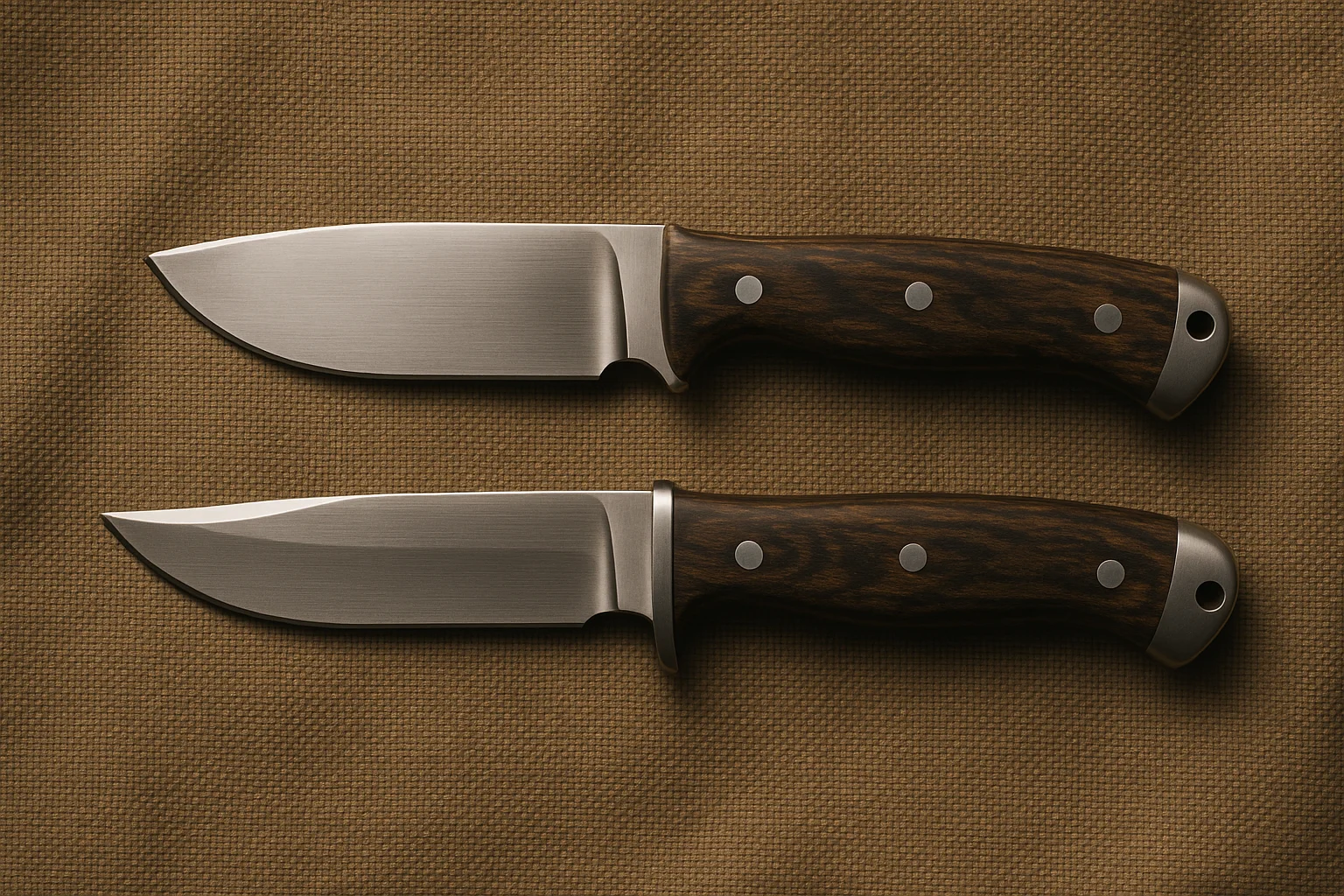
A hidden-tang knife has a narrower steel post extending into the handle rather than steel running the full width and length of the grip, with the handle material itself — wood, bone, antler — providing most of the handle's actual bulk and shape around that narrower post. The tang is fully hidden inside the handle material rather than visible at the edges.
Strength Comparison
Full tang construction is significantly stronger, particularly for hard use — batoning, prying, heavy chopping — since the full-width steel core resists breaking at the handle junction far better than a narrower hidden-tang post can. A hidden-tang knife is more likely to fail at the handle under significant lateral stress, since that narrower post is the weak point.
Balance and Feel
Full-tang knives tend to be more blade-heavy and substantial in the hand, given the additional steel running through the handle. Hidden-tang knives can feel lighter and sometimes better balanced for tasks that benefit from a lighter overall knife, since less steel mass sits in the handle.
When Hidden Tang Is Still a Reasonable Choice
For lighter-duty knives — many traditional kitchen knives, some hunting and utility knives not expected to see hard prying or batoning use — hidden tang construction is a perfectly reasonable, time-tested approach, and many traditional and heritage knife patterns are built this way specifically for the lighter, more balanced feel it offers.
What to Choose Based on Use
- Hunting, survival, and outdoor knives expected to see hard use: full tang, for maximum strength and reliability.
- Traditional kitchen and everyday utility knives: either construction can work well, with full tang generally the safer default choice for durability.
- Lighter, more balance-focused traditional or heritage-pattern knives: hidden tang remains a legitimate, well-established choice.
Comments (0)
No comments yet. Be the first to share your thoughts!
Leave a comment
Your comment will appear after it's reviewed. Your email is never shown publicly.