

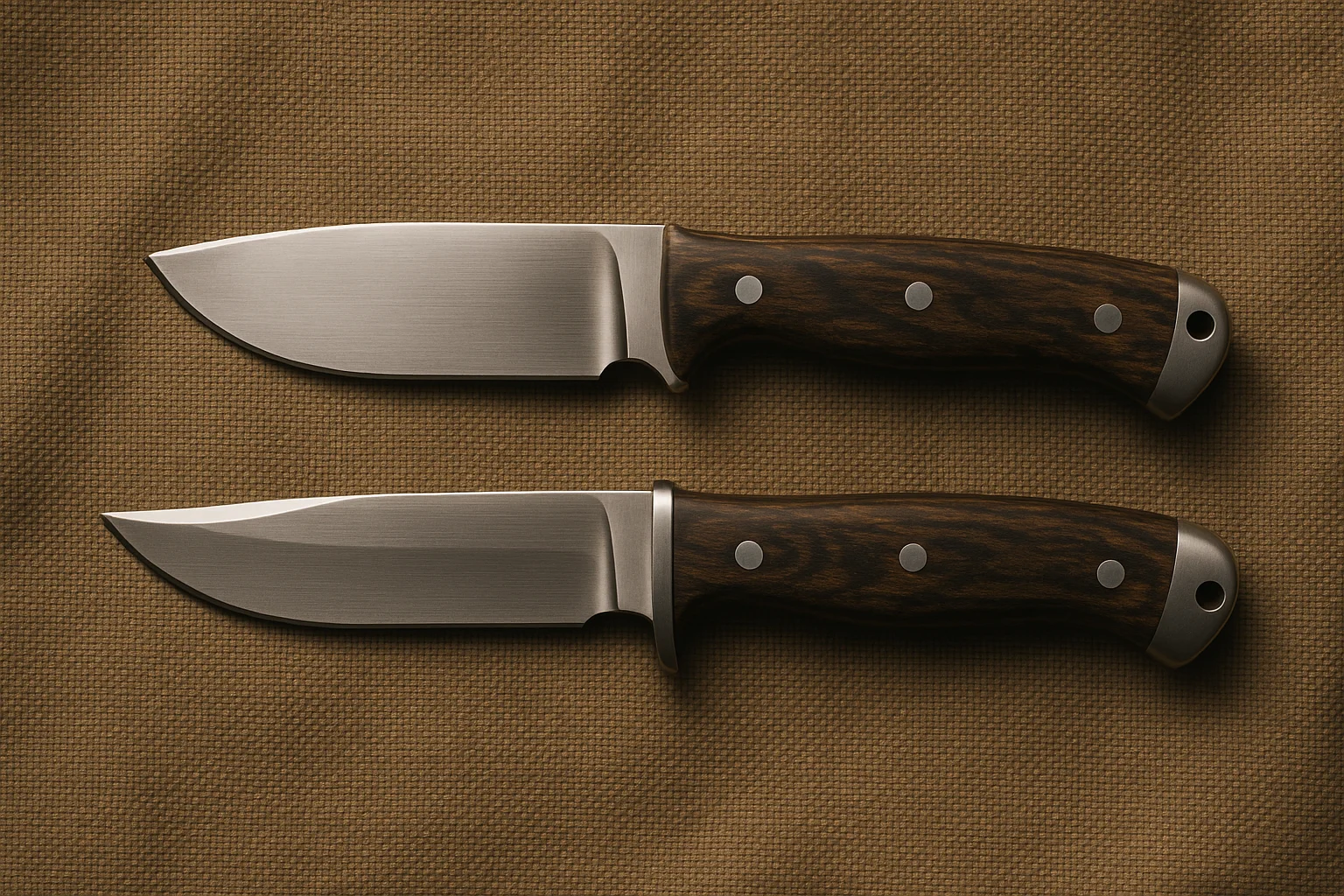
Blade shape is one of the first real decisions in choosing a hunting knife, and drop point versus clip point is the classic comparison — two shapes that look only subtly different but handle field dressing and general use in genuinely different ways.
Drop Point Blade
A drop-point blade has a spine that curves gently downward from the handle to the tip, keeping the point in line with, or slightly below, the centerline of the blade. This creates a strong, gently sloped tip that's much less likely to accidentally puncture something you don't intend to — an animal's internal organs during field dressing, for example — because the point isn't aggressively raised or sharpened to a fine, easily-penetrating angle.
Clip Point Blade
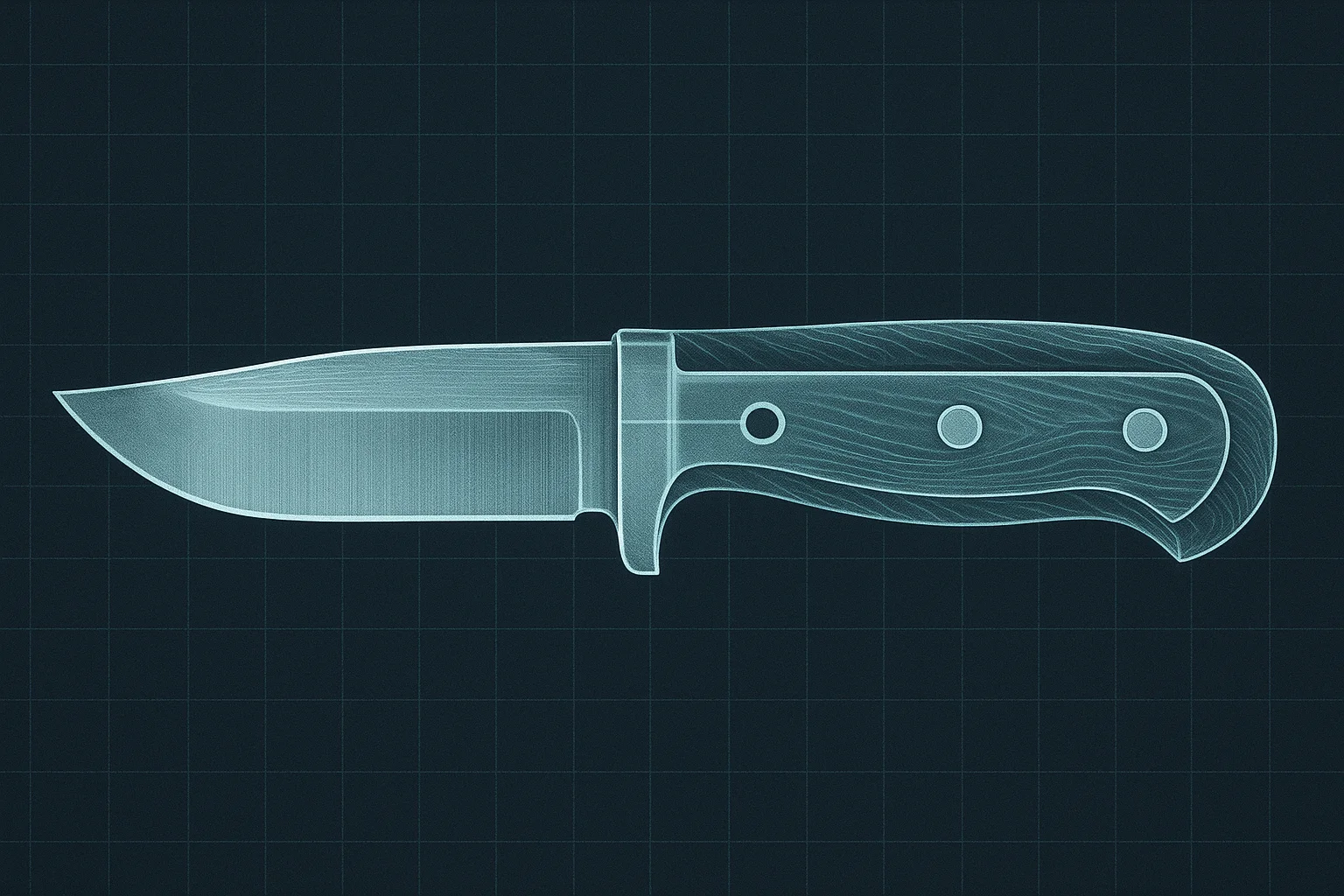
A clip-point blade has a concave or straight "clipped" section cut into the upper portion of the spine near the tip, creating a finer, more raised point with a sharper piercing angle than a drop point. This design — the same one behind the classic Bowie knife pattern — trades some of the drop point's accidental-puncture safety for a more precise, capable piercing tip.
Why This Matters for Hunting
Field dressing game requires controlled cuts around internal organs where an accidental puncture can taint meat or damage a hide. A drop point's less aggressive, lower tip gives more margin for error during this specific task, which is why it's become the standard recommendation for hunters, particularly those newer to field dressing.
Where Clip Point Excels
The finer, more raised tip on a clip point is genuinely better for tasks requiring precise piercing or detail work — starting a cut, working into tight spaces, or general utility tasks where a sharper point is an advantage rather than a liability. This is part of why the clip point remains popular on general-purpose and traditional fixed blades beyond hunting specifically.
Strength Comparison
A drop point's thicker, less aggressively angled tip is generally stronger and more resistant to breaking under lateral stress than a clip point's finer, more exposed tip — another reason it's often favored for knives expected to see harder general use, not just field dressing specifically.
Which Should You Choose?
- Hunting and field dressing, especially for newer hunters: drop point, for the added margin against accidental punctures and the stronger tip.
- General-purpose fixed blade with detail and piercing capability a priority: clip point, for the finer, more precise tip.
- Uncertain, want one versatile all-around choice: drop point is the more broadly recommended default for most hunting and general outdoor use.
Both Are Time-Tested Designs
Neither shape is objectively superior — both have persisted for generations precisely because each solves a real, specific problem well. The right choice comes down to matching the blade shape to what you'll actually be using the knife for most often.
Comments (0)
No comments yet. Be the first to share your thoughts!
Leave a comment
Your comment will appear after it's reviewed. Your email is never shown publicly.