Discover the ulu, a traditional Inuit curved knife still prized for its unique rocking cutting motion.
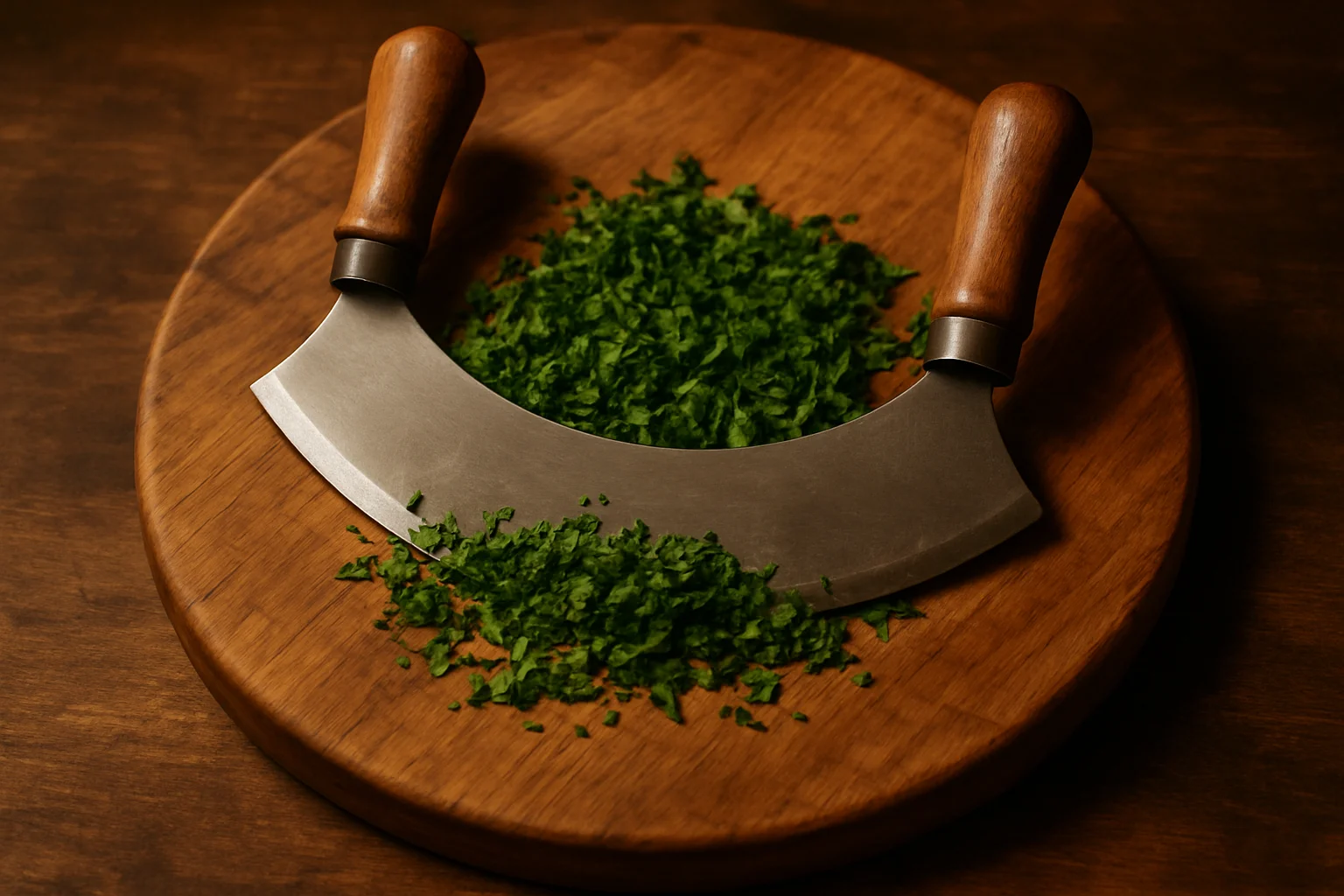
Most knives cut with a straight or slightly curved edge pushed or sliced through food. The ulu does something different — its crescent-shaped blade rocks through cuts with the handle centered directly above the edge, a design that's been used by Inuit and Yupik communities for generations and still works remarkably well in a modern kitchen.
What Defines an Ulu
An ulu has a distinctive crescent or fan-shaped blade with the handle mounted centrally on top, directly above the curve of the edge, rather than extending from one end the way a conventional knife handle does. This centered handle position is what enables the knife's signature rocking motion.
Traditional History
Ulu knives have a long history among Inuit, Yupik, and other Arctic Indigenous communities, traditionally used by women for a wide range of tasks including food preparation, skinning game, and cutting materials for clothing and shelter — a genuinely essential, multi-purpose tool rather than a single-use implement.
How the Rocking Motion Works
With the handle centered above the blade, an ulu rocks side to side along its curved edge, similar in principle to a pizza cutter but with a blade edge instead of a wheel. This motion lets the user chop and mince with a continuous rocking rhythm, keeping the food contained under the blade's curve throughout the cut.
Modern Kitchen Uses
- Mincing herbs: the rocking motion makes quick, even work of finely chopping herbs.
- Chopping vegetables: particularly effective for foods that benefit from a continuous rocking chop rather than repeated straight strokes.
- Mixing while chopping: the curved blade can fold and mix ingredients together while continuing to chop, useful for dishes like salsas or salads made directly in a bowl.
- Pizza and flatbread cutting: the rocking motion adapts naturally to this task, similar to a dedicated pizza cutter.
Ulu vs. Traditional Knives for Chopping
For tasks well-suited to a rocking, contained chopping motion — herbs, small vegetables, mincing in a bowl — an ulu can be genuinely faster and more efficient than repeatedly lifting and repositioning a standard chef's knife. It's less suited to precision slicing, detail work, or tasks requiring a pointed tip, where a conventional knife remains the better tool.
Why It's Still Relevant Today
Beyond its practical rocking-chop efficiency, the ulu carries genuine cultural and historical significance as a traditional Indigenous design that continues to be made and used both within Arctic communities and by home cooks elsewhere who've discovered its practical advantages for specific kitchen tasks.


Comments (0)
No comments yet. Be the first to share your thoughts!
Leave a comment
Your comment will appear after it's reviewed. Your email is never shown publicly.