

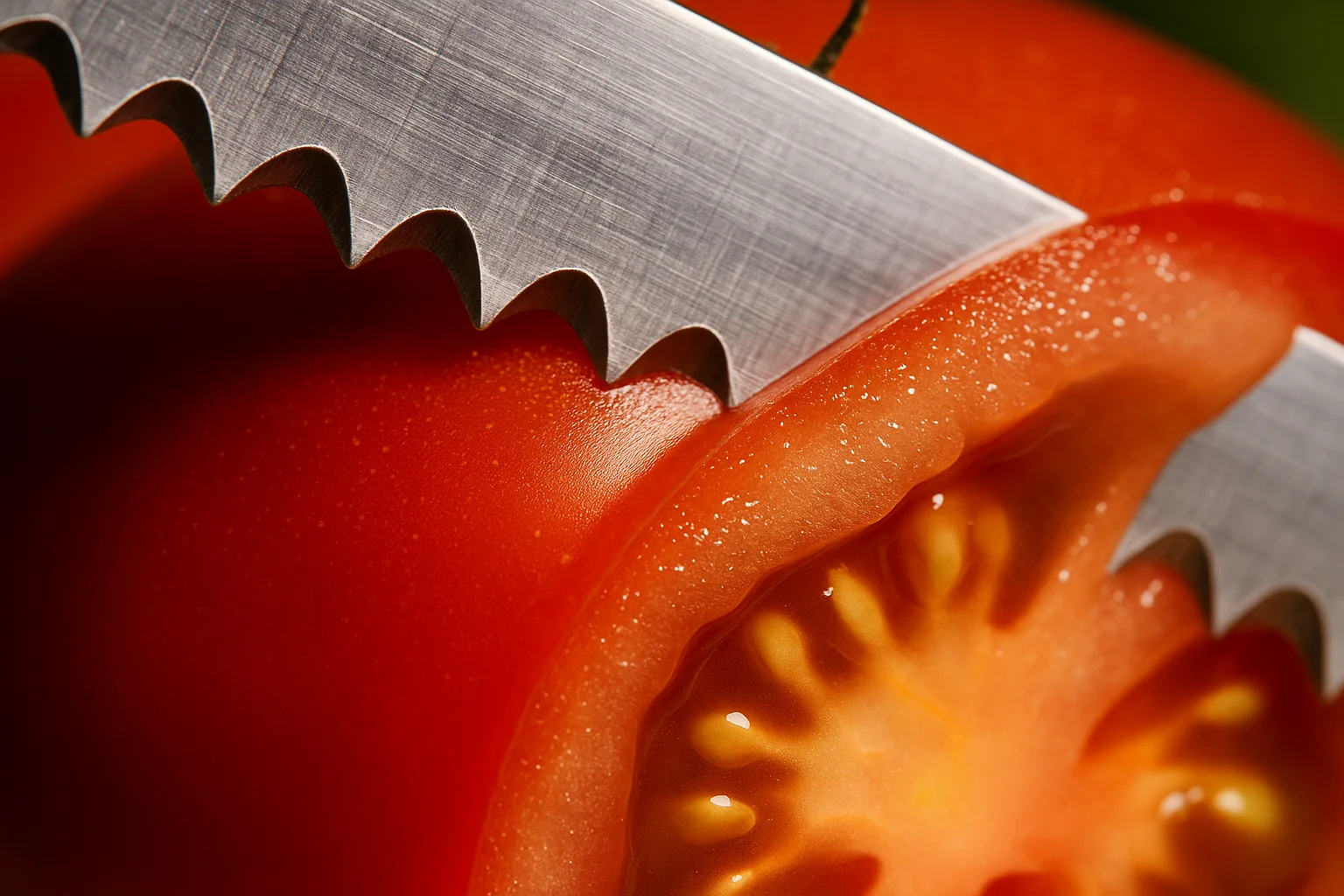
Every kitchen has at least one serrated knife, usually a bread knife, but the saw-tooth edge design shows up on a range of blades beyond bread — and understanding why it works the way it does explains when to reach for it instead of a straight edge.
How Serration Works
A serrated edge is a row of small, individually beveled points rather than one continuous cutting line. Each point grips into a food's surface on contact, letting the blade saw through with a back-and-forth motion rather than needing to press straight down through the whole thickness at once — which is exactly what lets it handle foods with a tough exterior and soft interior without crushing them.
Foods Serrated Knives Handle Best
- Bread: the signature use — cutting through crust without crushing the crumb.
- Tomatoes: the teeth bite into the skin instantly instead of sliding off it, giving clean slices without squashing the flesh.
- Citrus: saws through the tough peel cleanly.
- Cakes and other soft baked goods: cuts cleanly through delicate crumb without compressing it.
- Melons and other thick-skinned produce: the same crust-vs-interior principle as bread applies here too.
- Sausages and cured meats with a tougher casing: the serration handles the casing without needing excessive pressure.
Why a Straight Edge Sometimes Fails at These Tasks
A dull or even a moderately sharp straight edge often slides off a smooth, tough surface like tomato skin before it can bite in, requiring extra downward pressure that then crushes the softer flesh underneath the moment the edge finally catches. A serrated edge's teeth grip immediately, avoiding that extra pressure altogether.
Comments (0)
No comments yet. Be the first to share your thoughts!
Leave a comment
Your comment will appear after it's reviewed. Your email is never shown publicly.