Traditionally reserved for head chefs, the kiritsuke blends a chef's knife and a vegetable knife in one.
The kiritsuke occupies a special place in Japanese kitchen culture — traditionally, it was the one knife reserved for the head chef, a mark of rank as much as a working tool. That history still shapes how it's regarded today, even as it's become more widely available.
What Defines a Kiritsuke
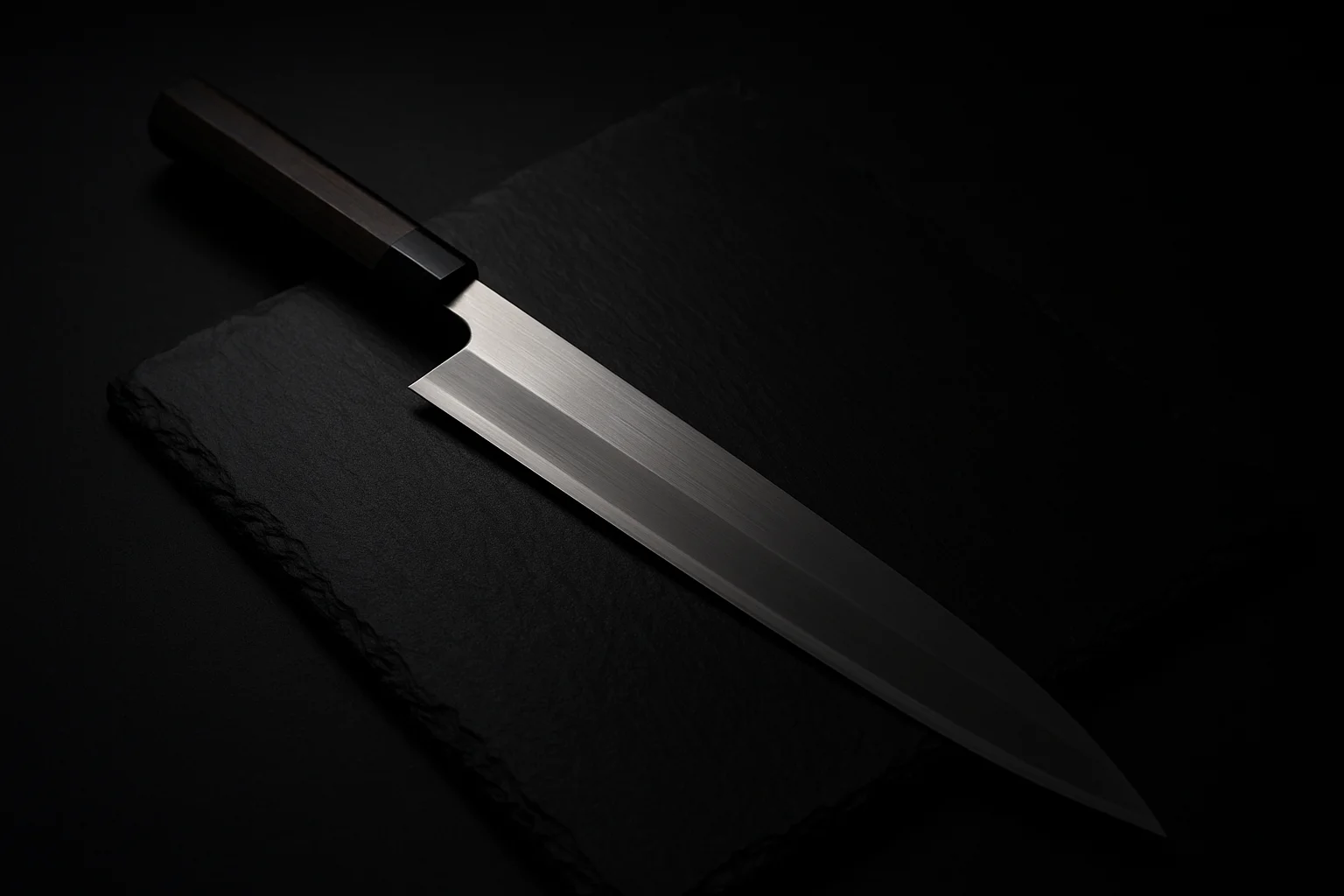
A kiritsuke combines the length and general versatility of a gyuto (Japanese chef's knife) with the flatter cutting edge of a vegetable knife like an usuba, topped with a distinctive angled tip similar in spirit to a bunka's reverse-tanto point but generally more pronounced. The result is a long, striking blade that handles a hybrid role between general-purpose chef's knife and precision vegetable knife.
Traditional Role
In traditional Japanese kitchen hierarchy, the kiritsuke was historically reserved for the head chef (itamae), symbolizing both seniority and the skill required to use its unique geometry well — a single knife capable of covering general prep, fine vegetable work, and precise slicing, in the hands of someone skilled enough to use all of that versatility effectively.
What a Kiritsuke Is Used For
- General chopping and slicing: the gyuto-influenced length and curve handle broad prep work.
- Precision vegetable cuts: the flatter portion of the edge, closer to an usuba's geometry, suits fine push-cuts through vegetables.
- Fish slicing: some kiritsuke designs handle sashimi-style slicing reasonably well, bridging toward a yanagiba's role.
- Precise tip work: the angled point offers strength and precision similar to a bunka's tip, useful for detail cuts.
Why It Takes More Skill to Use Well
Because a kiritsuke blends the geometry of several more specialized knives into one blade, getting the most out of it requires adapting technique across different cutting styles — the push-cut precision of a vegetable knife, the rocking versatility of a gyuto, and the controlled slicing of a fish knife — rather than relying on one consistent motion the way a more specialized single-purpose blade allows.
Single-Bevel vs. Double-Bevel Kiritsuke
Traditional kiritsuke are often single-bevel, ground almost entirely on one side in the manner of a yanagiba or usuba, which demands specialized sharpening knowledge and technique. Double-bevel versions, ground symmetrically like a standard gyuto, are more accessible for cooks without single-bevel sharpening experience while still offering the kiritsuke's distinctive profile and versatility.
Who Should Consider a Kiritsuke
Cooks who already have experience with Japanese-style knives and want a single, striking, highly versatile blade — rather than building out a full specialized set — are the best fit. It's a less forgiving first Japanese knife for someone brand new to the style compared to a santoku or gyuto.


Comments (0)
No comments yet. Be the first to share your thoughts!
Leave a comment
Your comment will appear after it's reviewed. Your email is never shown publicly.