
Buying Guides & Knife Types

What Is a Karambit Knife?

Posted by Umar Toor · 9 Sep, 2026 · 2 min read · 19 views · 0 comments
What Is a Karambit Knife?

Learn the origins and modern use of the karambit, a curved blade inspired by a tiger's claw.

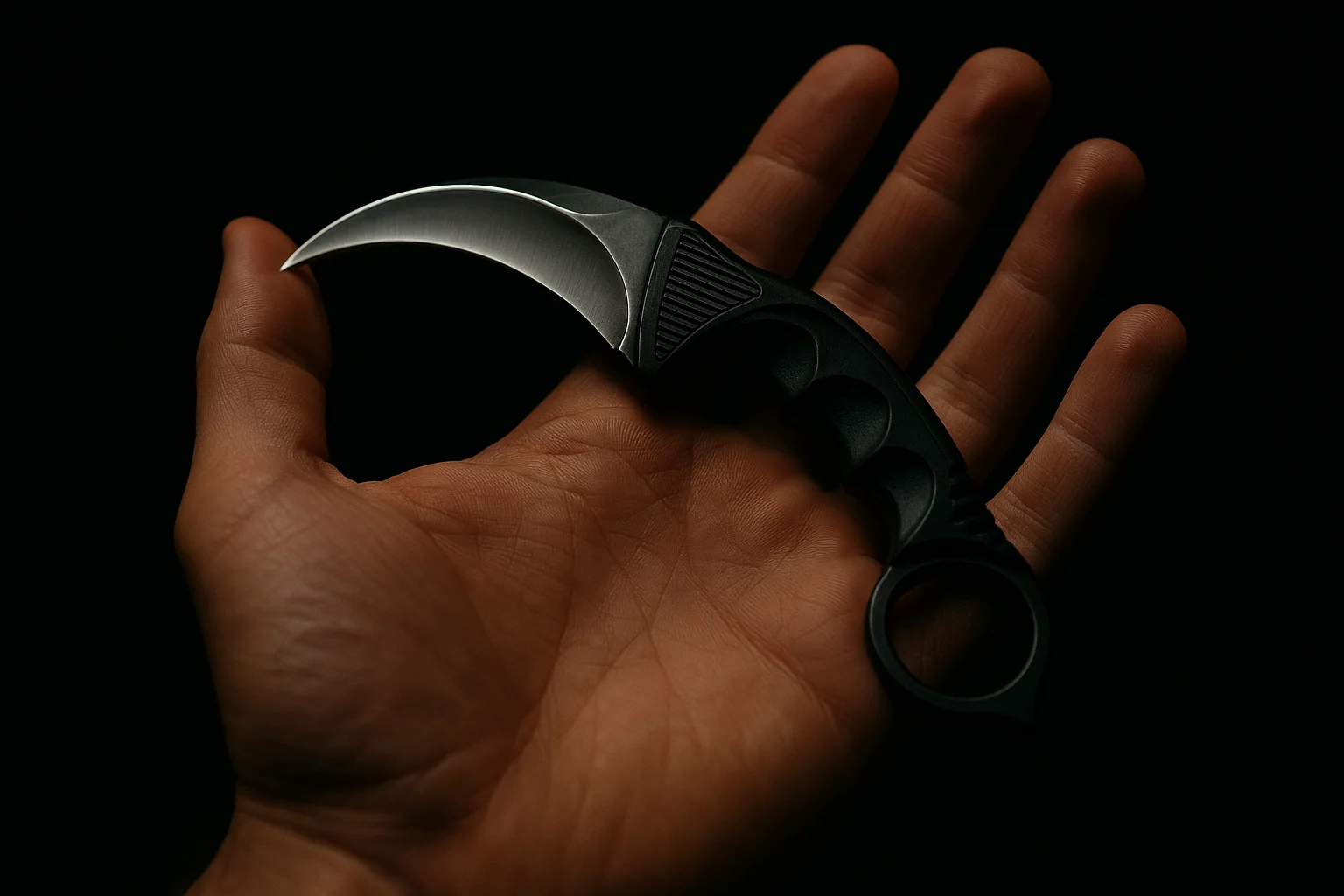
A karambit's curved blade and finger-ring handle look unlike almost any other knife shape, and that's entirely intentional — the design traces back to Southeast Asian martial arts traditions, inspired directly by the shape of a tiger's claw and built around a fundamentally different grip than a conventional knife.

Origins

The karambit originates from Southeast Asia, particularly Indonesian and Malay martial arts traditions (silat), where its curved, claw-like blade shape was directly inspired by the tiger claws observed in the region. It developed as both a martial arts weapon and, in some traditional contexts, an agricultural tool.

What Defines a Karambit

Why the Finger Ring Matters

The finger-ring grip is the karambit's most distinctive functional feature — it lets the user maintain a secure hold on the knife even when the hand is opened or under stress, which is central to the design's martial arts origins and makes it notably difficult to disarm compared to a conventionally gripped knife.
Everyday Utility Uses

Despite its martial arts reputation, the curved blade genuinely handles a range of everyday utility tasks well:

Karambit as an EDC Knife

A karambit is a less conventional but genuinely functional EDC choice for someone who values the secure finger-ring grip and finds the hooking cutting motion useful for their typical daily tasks — though its distinctive shape and reputation make it a more polarizing choice than a standard folding EDC knife for everyday carry in public settings.

Legal Considerations

Given its historical martial-arts association and distinctive appearance, a karambit can draw more scrutiny in some contexts than an ordinary folding knife of similar blade length, even where it's not specifically named as a restricted type under local law — worth being mindful of depending on where and how openly you carry one.

Share:

Frequently Asked Questions

A tiger's claw — the design originates from Indonesian and Malay martial arts traditions (silat), where the curved, claw-like blade shape was directly inspired by tiger claws observed in the region.

It secures the knife firmly in the hand, even under grip pressure or an attempted disarmament, which is central to the design's martial arts origins and makes it notably difficult to take away compared to a conventionally held knife.

No — despite its martial arts reputation, the curved blade genuinely handles everyday utility tasks well, including cutting rope, fabric, and packaging using a hooking, pulling motion.

It can be, for someone who values the secure finger-ring grip and finds the hooking cutting motion useful, though its distinctive shape and martial arts reputation make it a more polarizing public EDC choice than a standard folder.

This depends on your local knife-carry laws, similar to any other knife type — but its distinctive martial-arts appearance can draw more scrutiny in some contexts even when it's not specifically named as a restricted type.

Comments (0)

No comments yet. Be the first to share your thoughts!

Leave a comment

Your comment will appear after it's reviewed. Your email is never shown publicly.

You May Also Like

Drop Point vs Clip Point: Hunting Knife Blade Shapes Explained

Drop Point vs Clip Point: Hunting Knife Blade Shapes Explained

Umar Toor · 12 Sep, 2026
Full Tang vs Hidden Tang: What's the Difference?

Full Tang vs Hidden Tang: What's the Difference?

Umar Toor · 11 Sep, 2026
Tomahawk vs Hatchet: Which Should You Choose?

Tomahawk vs Hatchet: Which Should You Choose?

Umar Toor · 11 Sep, 2026
Hatchet vs Axe: What's the Difference?

Hatchet vs Axe: What's the Difference?

Umar Toor · 10 Sep, 2026