
Buying Guides & Knife Types

What Is a Gyuto Knife?

Posted by Umar Toor · 4 Sep, 2026 · 2 min read · 14 views · 0 comments
What Is a Gyuto Knife?

The Japanese chef's knife — thinner, lighter, and sharper than its Western counterpart.

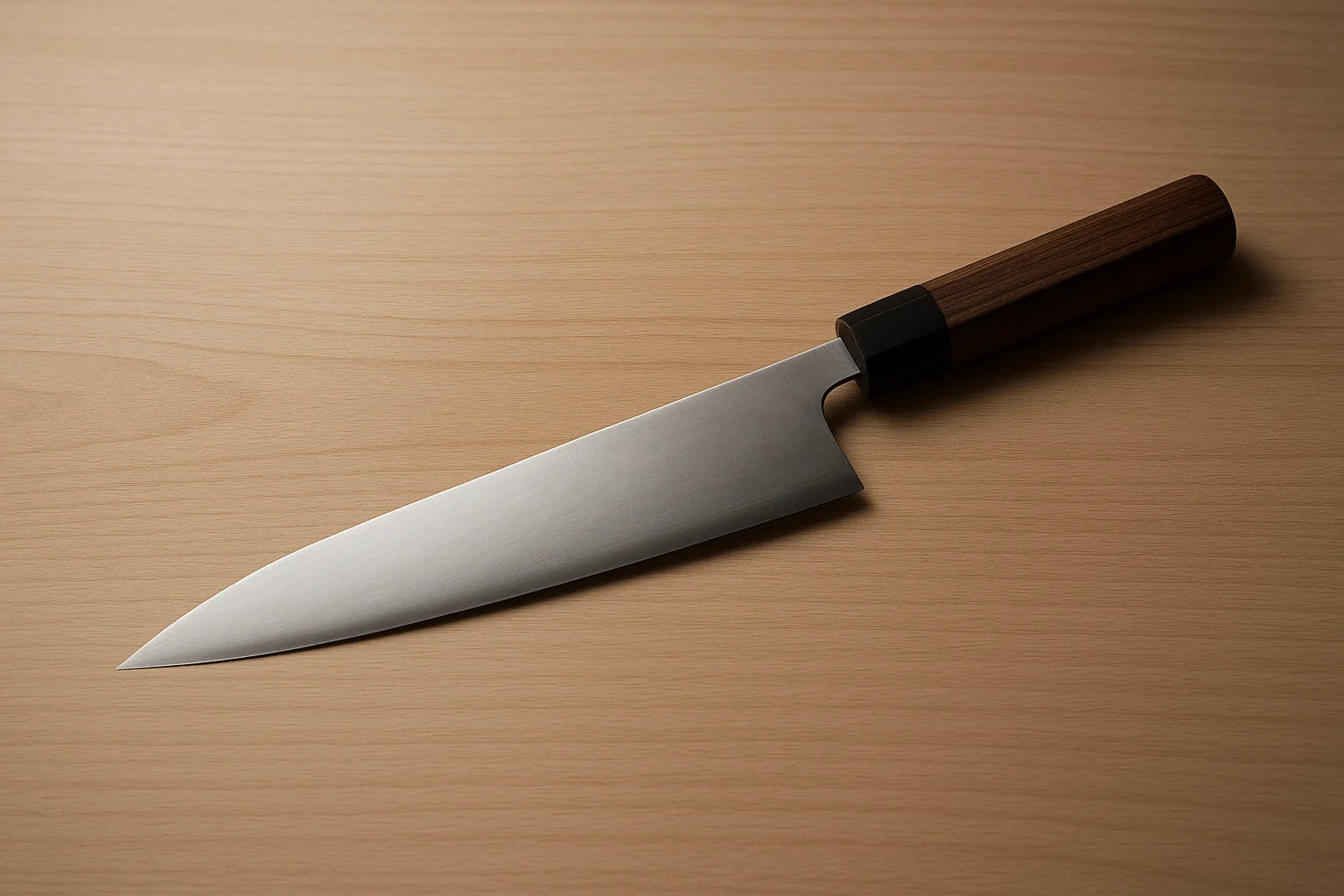
If a Western chef's knife and a traditional Japanese single-bevel knife had a direct descendant built for general kitchen use, it would look a lot like a gyuto — Japan's take on the all-purpose chef's knife, and increasingly the knife serious home cooks reach for first.

What Defines a Gyuto

A gyuto shares the general profile and versatility of a Western chef's knife — a curved edge suited to rocking cuts, similar length range (typically 8–10 inches) — but is usually ground thinner, with a finer edge angle and often a harder steel, trading some durability for a noticeably sharper, more precise cutting experience.

What a Gyuto Is Used For

Gyuto vs. Western Chef's Knife

The functional roles overlap heavily — both are general-purpose, board-based workhorses — but the gyuto's thinner geometry and typically harder steel give it a sharper, more precise edge at the cost of some durability against hard impacts, twisting motions, or bone contact that a sturdier Western chef's knife tolerates more forgivingly.
Gyuto vs. Santoku

A santoku has a flatter edge profile suited to a push-cutting motion, while a gyuto retains more curve, similar to a Western chef's knife, suited to a rocking motion. Cooks who already rock-chop with a Western chef's knife tend to adapt to a gyuto more naturally than to a santoku's flatter, push-cut-oriented edge.

Choosing a Gyuto

Caring for a Gyuto

Given its thinner, harder edge, a gyuto sharpens best in the 12–15 degree per side range typical of Japanese-style blades, and benefits from a dedicated cutting board (end-grain wood ideally) to protect the finer, more brittle edge from unnecessary wear.

Share:

Frequently Asked Questions

General-purpose kitchen prep — chopping, slicing, dicing, and mincing — the same broad role a Western chef's knife plays, but with a thinner, sharper edge suited to more precise cutting.

The gyuto is typically ground thinner with a finer edge and often a harder steel, giving a sharper, more precise cut at some cost to durability compared to a sturdier Western chef's knife.

Neither is objectively better — a gyuto keeps more curve for a rocking-cut motion similar to a Western chef's knife, while a santoku has a flatter edge suited to push-cutting. The better choice depends on your cutting style.

8–9 inches is the most versatile range for most home kitchens, matching the typical length range of a Western chef's knife.

At a fine 12–15 degree angle per side, typical of Japanese-style blades, and ideally on an end-grain wood cutting board to protect the thinner, more brittle edge from unnecessary wear.

Comments (0)

No comments yet. Be the first to share your thoughts!

Leave a comment

Your comment will appear after it's reviewed. Your email is never shown publicly.

You May Also Like

Drop Point vs Clip Point: Hunting Knife Blade Shapes Explained

Drop Point vs Clip Point: Hunting Knife Blade Shapes Explained

Umar Toor · 12 Sep, 2026
Full Tang vs Hidden Tang: What's the Difference?

Full Tang vs Hidden Tang: What's the Difference?

Umar Toor · 11 Sep, 2026
Tomahawk vs Hatchet: Which Should You Choose?

Tomahawk vs Hatchet: Which Should You Choose?

Umar Toor · 11 Sep, 2026
Hatchet vs Axe: What's the Difference?

Hatchet vs Axe: What's the Difference?

Umar Toor · 10 Sep, 2026