
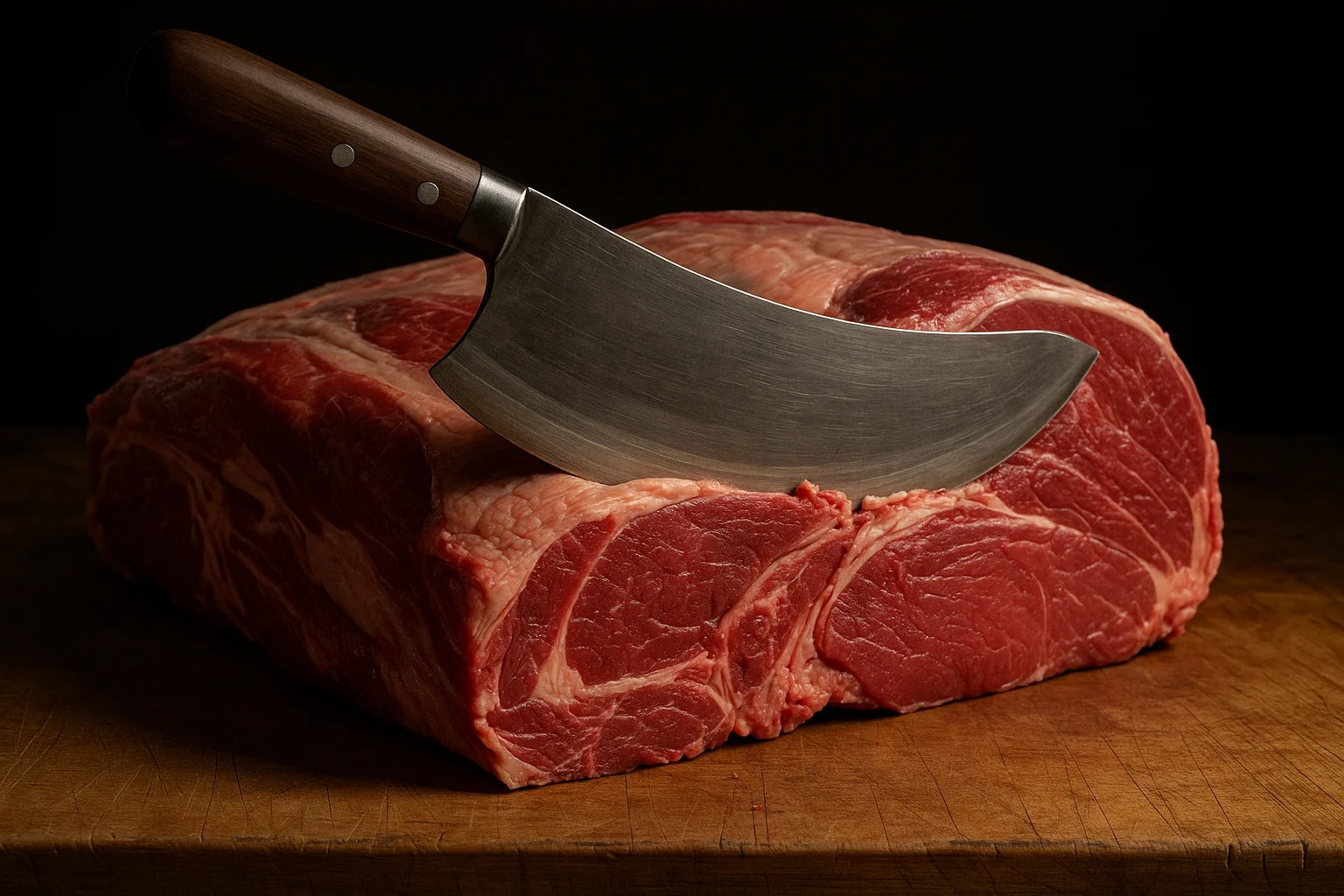
A butcher knife's wide, curved blade is instantly recognizable, but its actual job in a real workflow is narrower and more specific than people often assume: it's the tool that gets between "primal cut" and "manageable piece," not the one that does fine, precise trimming.
What Defines a Butcher Knife
A butcher knife typically has a wide, curved blade — often 6 to 10 inches — with enough weight and belly curvature to break down larger cuts of meat through a smooth, rocking or sweeping motion, rather than the short, controlled strikes a cleaver uses for bone.
What a Butcher Knife Is Used For
- Breaking down primal cuts: separating large sections of meat into smaller, more manageable pieces before finer work begins.
- Trimming fat and silverskin: the curved belly allows for long, smooth trimming strokes along larger cuts.
- Portioning: dividing a larger piece into steaks, roasts, or other portions.
- General heavy meat prep: tasks that need more length and cutting power than a boning knife offers, but don't require chopping through bone the way a cleaver does.
Butcher Knife vs. Cleaver
This is the comparison people most often get confused: a cleaver is built to chop through bone using weight and a controlled strike, while a butcher knife is built to slice and trim through meat and connective tissue using a smooth, extended cutting motion. If a task involves bone, reach for the cleaver; if it's slicing and trimming through meat itself, the butcher knife is the better tool.
Comments (0)
No comments yet. Be the first to share your thoughts!
Leave a comment
Your comment will appear after it's reviewed. Your email is never shown publicly.