

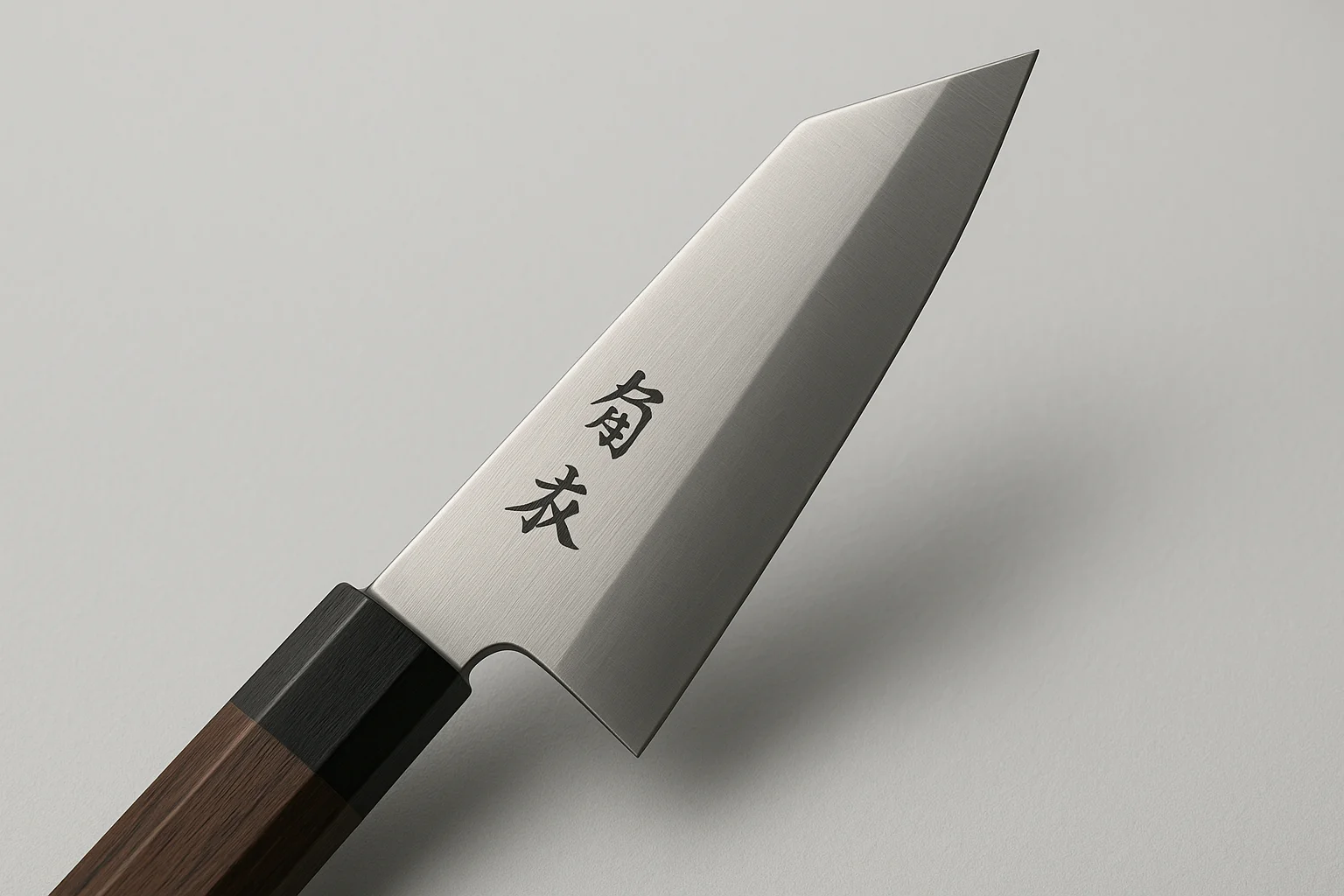
At first glance, a bunka knife looks like a santoku that got into a fight with a tanto — and that's essentially what it is: the santoku's flat, all-purpose profile combined with a reverse-tanto-style angled tip that gives it a distinct look and a meaningfully different capability at the point.
What Defines a Bunka
A bunka shares the santoku's relatively flat edge and broad, general-purpose vegetable-knife lineage, but replaces the santoku's rounded tip with an angled, reinforced reverse-tanto point — the spine slopes down to meet the edge at a distinct angle rather than curving smoothly.
What a Bunka Is Used For
- General vegetable prep: the same push-cut, flat-edge strength a santoku offers for slicing and dicing vegetables.
- Precision detail work at the tip: the reinforced, angled point handles fine detail cuts, scoring, and precise tip work more capably than a santoku's rounder tip.
- General all-purpose kitchen tasks: proteins, herbs, and everyday prep, similar in versatility to a santoku.
Bunka vs. Santoku
The core edge geometry and general-purpose role are nearly identical — the meaningful difference is entirely at the tip. A santoku's rounded point is gentler and more forgiving for general use; a bunka's angled point offers more precision and strength for detail work but requires slightly more care given its more pronounced, less rounded profile.
Why the Reverse-Tanto Tip Matters
The angled tip design distributes stress differently than a rounded point, giving it slightly more strength for fine piercing or detail cuts at the very point of the blade — a genuinely useful trait for cooks who do a lot of precise tip work, like removing small blemishes or intricate garnish cutting, beyond general chopping.
Who Should Choose a Bunka Over a Santoku
Cooks who want the santoku's general versatility but also value a stronger, more precise tip for detail work tend to prefer the bunka. Cooks who primarily do broad chopping and dicing without much need for fine tip precision may not notice much practical difference and could reasonably choose either.
Caring for a Bunka
Like a santoku, a bunka typically sharpens well in the 12–15 degree per side range common to Japanese-style knives, with the same general care — an end-grain wood board and gentle handling around hard impacts — protecting the finer edge.
Comments (0)
No comments yet. Be the first to share your thoughts!
Leave a comment
Your comment will appear after it's reviewed. Your email is never shown publicly.