

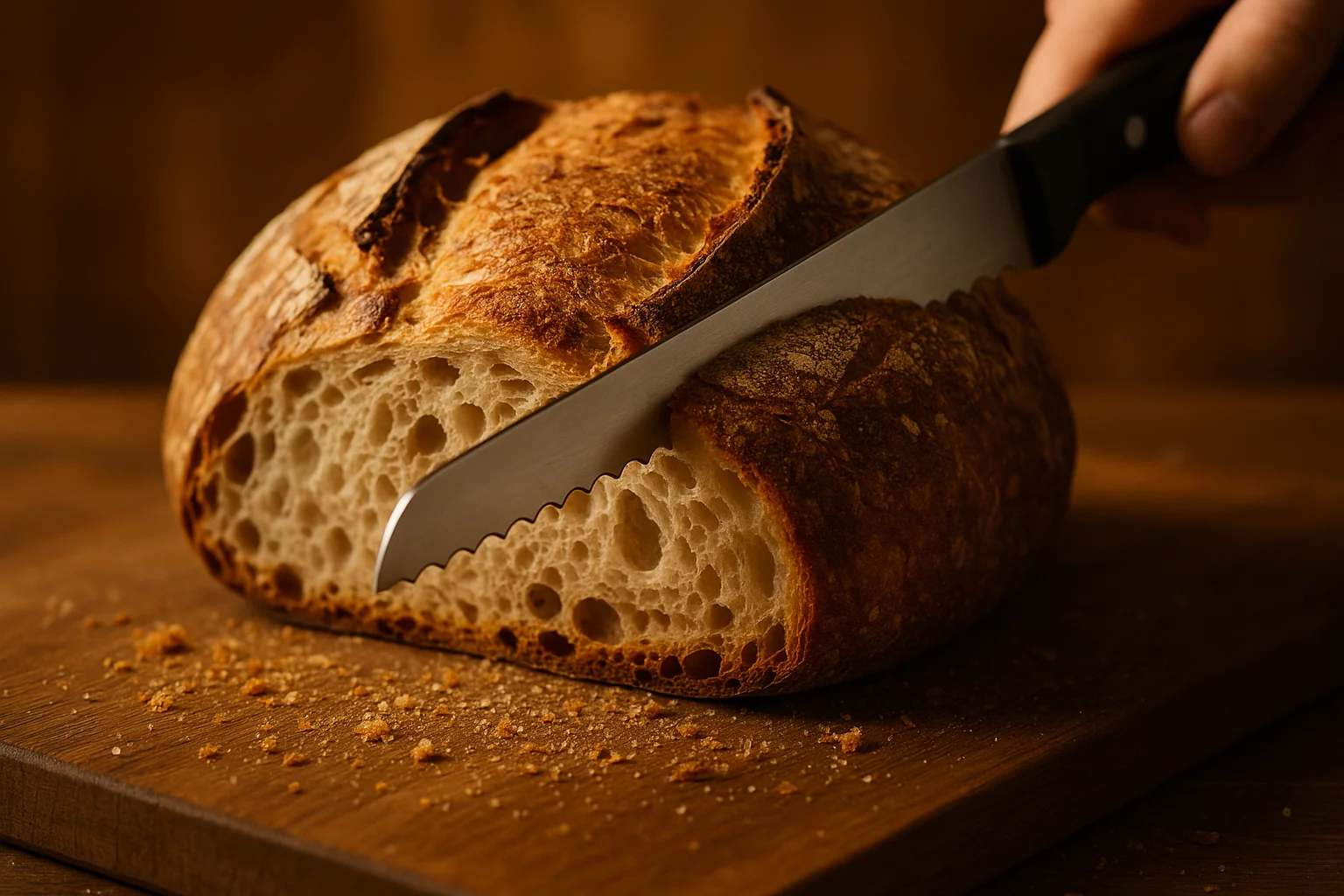
A bread knife's serrated edge is designed to solve one very specific problem — cutting through a crisp, resistant crust without crushing the soft, delicate crumb underneath — and that same saw-tooth design turns out to be useful for a surprising range of foods beyond bread.
Why Serration Matters for Bread
A straight edge pressed down on a crusty loaf has to compress the crust and crumb together before it can cut through, which is exactly what crushes the soft interior. A serrated edge's individual teeth grip and saw through the tough crust first, letting the blade pass through with minimal downward pressure — this is why a proper sawing motion, not a straight push-down cut, gets the best results.
Core Everyday Uses
- Slicing bread: the obvious use, and still the one the design is optimized for — crusty artisan loaves, soft sandwich bread, and everything in between.
- Tomatoes: the serrated edge bites into tomato skin instantly rather than sliding off it the way a dull straight edge tends to, giving clean slices without crushing the flesh.
- Citrus: the tough outer peel gets the same treatment as bread crust — the serration saws through cleanly.
- Cakes: particularly layer cakes, where a serrated edge gives a cleaner cut through soft, delicate crumb than a straight blade tends to.
- Melons: the tough rind meets the same crust-vs-crumb problem bread does, and serration handles it the same way.
- Sandwiches: cutting through crusty sub rolls or baguette sandwiches without squashing the filling.
What a Bread Knife Isn't Ideal For
General chopping, dicing, and mincing are better suited to a straight-edge chef's or utility knife — a serrated edge doesn't produce clean, uniform small cuts the way a straight edge does, and it's genuinely harder to sharpen and maintain for that kind of precision work.
Comments (0)
No comments yet. Be the first to share your thoughts!
Leave a comment
Your comment will appear after it's reviewed. Your email is never shown publicly.