

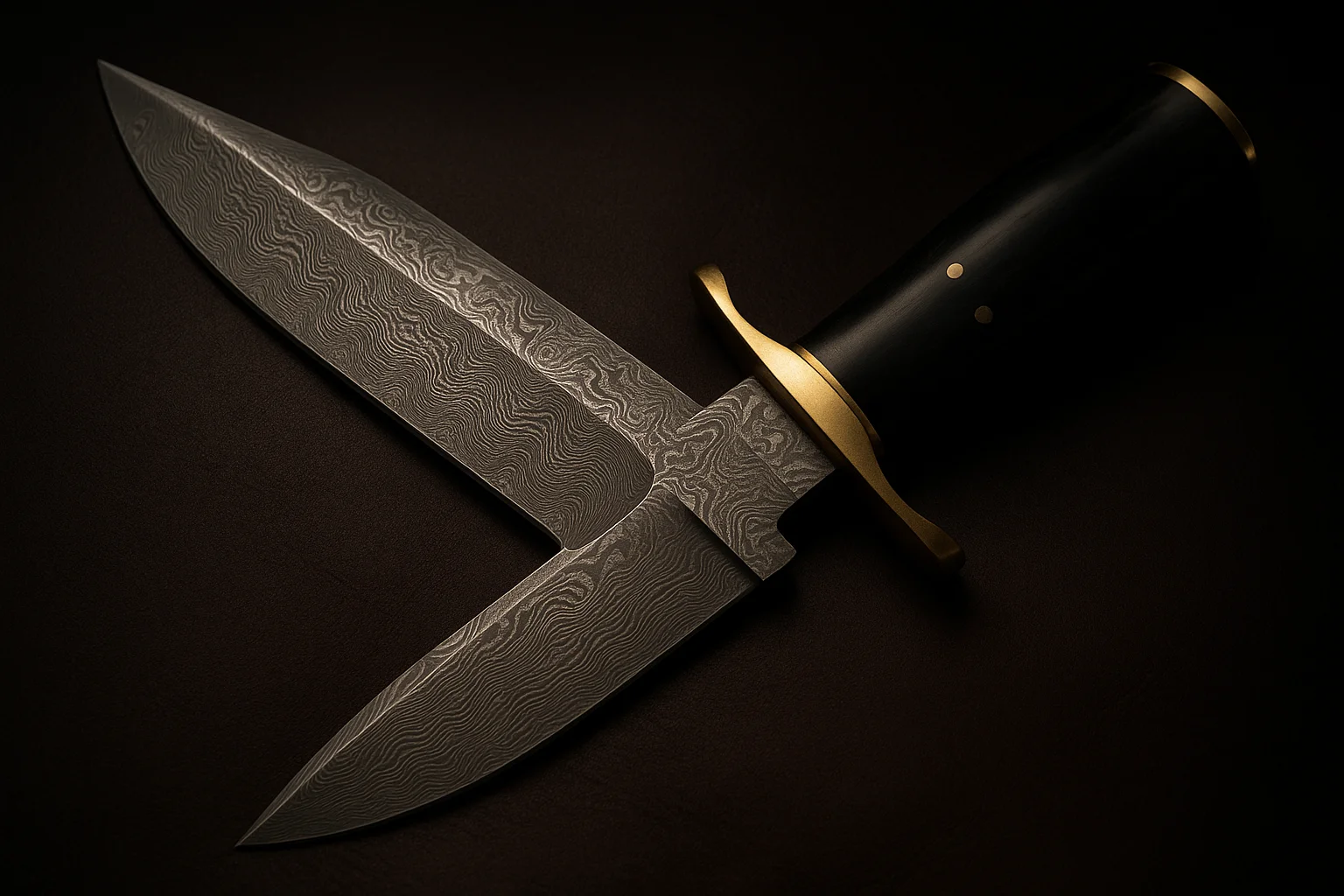
Few knife shapes carry as much American history and folklore as the Bowie knife — a design that's been reshaped by legend as much as by function, tracing back to the early 19th century and a name still associated with frontier toughness nearly two centuries later.
Historical Origins
The Bowie knife's name comes from Jim Bowie, a 19th-century American frontiersman whose reputation — cemented by accounts of an 1827 duel known as the Sandbar Fight and later by his death at the Alamo in 1836 — turned the large fighting/utility knife associated with him into a widely recognized and replicated pattern across the American frontier.
What Defines a Bowie Pattern
- Clip-point blade: the upper portion of the spine is "clipped" — concave or straight-cut back toward the tip — creating a fine point useful for both piercing and detail work.
- Substantial blade length: typically 6 to 12 inches, considerably larger than a typical EDC or utility knife.
- Cross-guard: a hand guard separating blade from handle, originally functional for protecting the hand during the kind of close combat the knife was historically associated with.
- Full tang construction: built for durability and heavy use, consistent with its original role as a fighting and utility knife.
Original Purpose
Despite its fighting-knife reputation, the Bowie was designed and used as a genuinely practical frontier utility knife — capable of hunting, camp tasks, and general heavy-duty cutting — with its self-defense capability being one function among several rather than its sole purpose.
Modern Uses
- Camp and outdoor use: the substantial blade handles batoning, clearing brush, and general heavy outdoor tasks well.
- Hunting: a capable choice for field dressing and processing larger game, particularly with a slightly modified drop-point variant.
- Collecting: given its historical significance, the Bowie pattern remains a popular category for collectors, especially in hand-forged Damascus versions that showcase both craftsmanship and the pattern's heritage.
- General heavy-duty utility: anywhere a large, durable fixed blade is more useful than a smaller knife.
Bowie Knife Legal Considerations
Because of its size and historical fighting-knife association, some states specifically name or classify Bowie-pattern knives under weapons statutes separately from ordinary fixed blades of similar length — worth checking your specific state's law if you're planning to carry one, rather than assuming a large fixed blade is treated the same everywhere regardless of pattern name.
Comments (0)
No comments yet. Be the first to share your thoughts!
Leave a comment
Your comment will appear after it's reviewed. Your email is never shown publicly.