

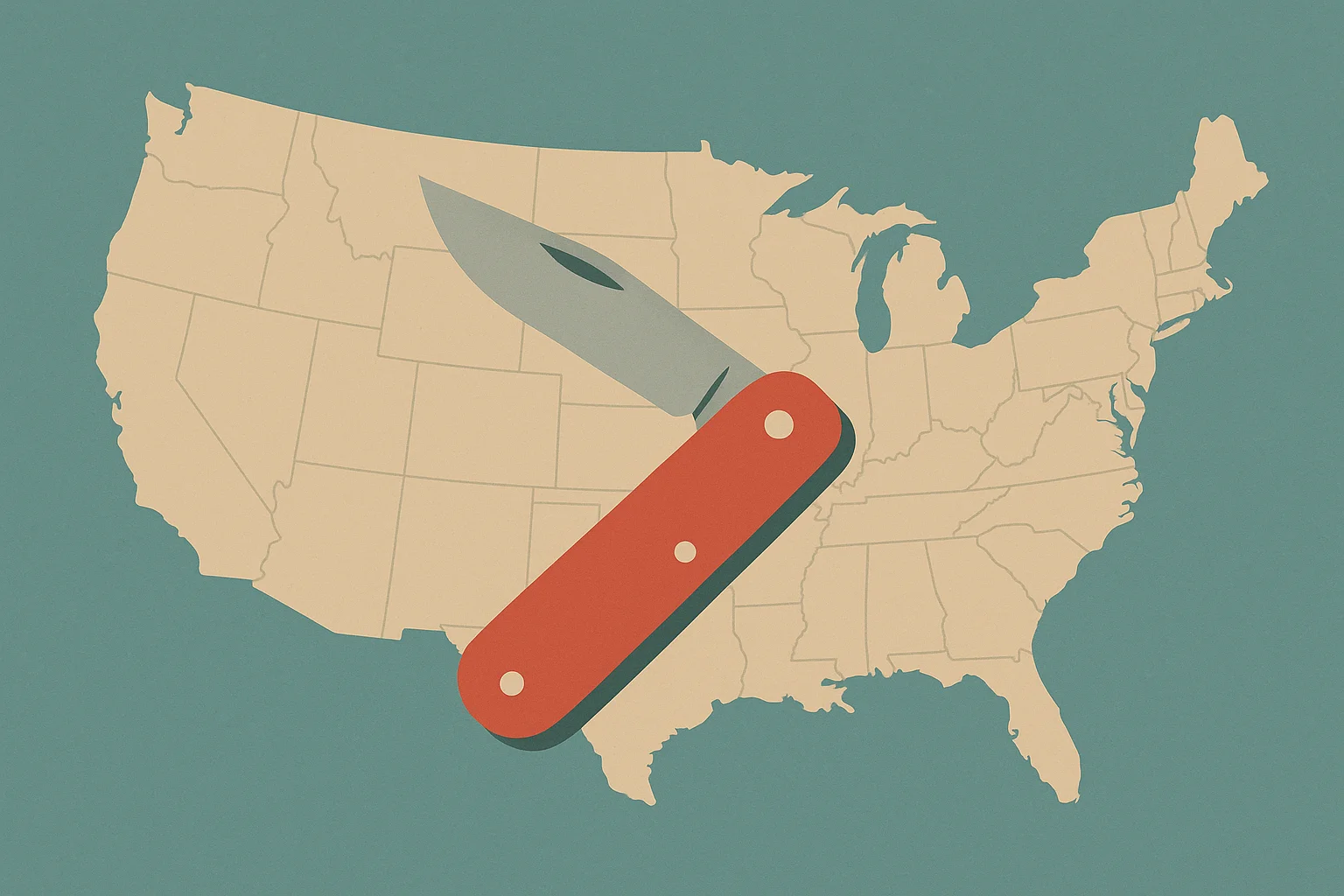
There's no single US law that answers whether it's legal to carry a pocket knife — carry law is set almost entirely at the state level, with some cities layering on their own additional rules on top. A knife that's completely unremarkable to carry in one state can technically be a restricted item a few hundred miles away. This guide is a general overview of how that patchwork works, not a substitute for checking the current law where you actually are.
Why There's No Single Federal Answer
Unlike firearms, which have a baseline set of federal regulations layered under state law, ordinary knife carry is governed almost entirely by state statute (with a narrow federal restriction on switchblades crossing state lines, covered separately). That means the honest answer to "is it legal to carry a pocket knife" is almost always "it depends on where."
The Factors That Usually Matter
Most state knife laws focus on a combination of the following, rather than banning pocket knives outright:
- Blade length — many states set (or used to set) a maximum length for concealed or general carry, though a growing number have removed length limits for ordinary folding knives entirely.
- How it's carried — open (visible) versus concealed carry are frequently treated differently, with concealed carry facing tighter restrictions in some states.
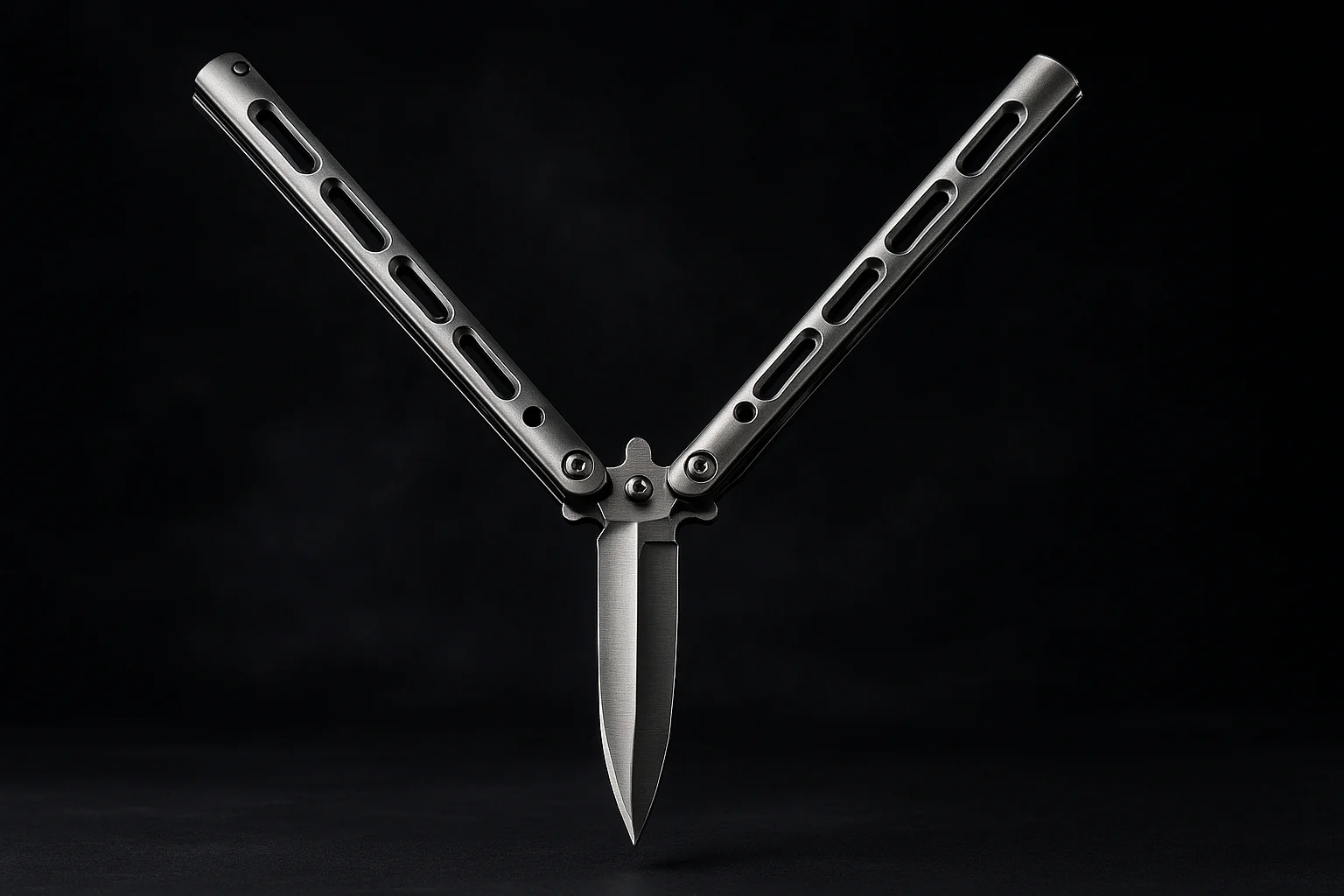
- Lock type and opening mechanism — automatic (switchblade), gravity, and certain assisted-opening mechanisms are singled out in some states even when an ordinary manual folder of the same size is unrestricted.
- Location — schools, government buildings, courthouses, and airports commonly restrict knife carry regardless of what's legal on the street outside.
- Intent — several states weigh whether a knife was carried or used with unlawful intent, which can matter as much as the knife itself.
The General National Picture
Most US states allow an ordinary folding pocket knife to be carried, openly or concealed, without much restriction — a trend that's grown more permissive over the last decade as several states removed blade-length caps altogether. A smaller number of states and cities (notably parts of the Northeast) maintain stricter rules, particularly around concealed carry, locking mechanisms, or specific restricted knife types like gravity knives, switchblades, and certain dagger or dirk styles.
Restricted Categories Regardless of State
Certain knife types face restriction or federal-level limits in most places no matter what the local blade-length rule says, including switchblades (federally restricted for interstate sale), ballistic knives (federally banned), and, in some states, disguised knives like belt-buckle or cane knives. Ordinary manual folders and fixed blades typically aren't affected by these narrower category restrictions.
What to Actually Check Before You Carry
- Your home state's specific blade-length and carry rules.
- Whether the city or county you're in has added stricter local rules on top of state law — this matters most in a handful of major cities.
- Whether you're traveling to or through a state with notably different rules than your own.
- Any location-specific restrictions — schools, courthouses, airports, federal buildings — that apply regardless of state law.
Why This Matters More When Traveling
Most knife-carry legal issues come up not because someone deliberately broke a law, but because they carried the same knife they always have into a state or city with rules they didn't know were different. Checking ahead of a trip — especially before flying or driving through several states — takes a few minutes and avoids a genuinely unpleasant surprise.
This article is general information, not legal advice. Knife laws change and vary by city as well as state — always verify current local law before carrying, especially when traveling.
Comments (0)
No comments yet. Be the first to share your thoughts!
Leave a comment
Your comment will appear after it's reviewed. Your email is never shown publicly.