

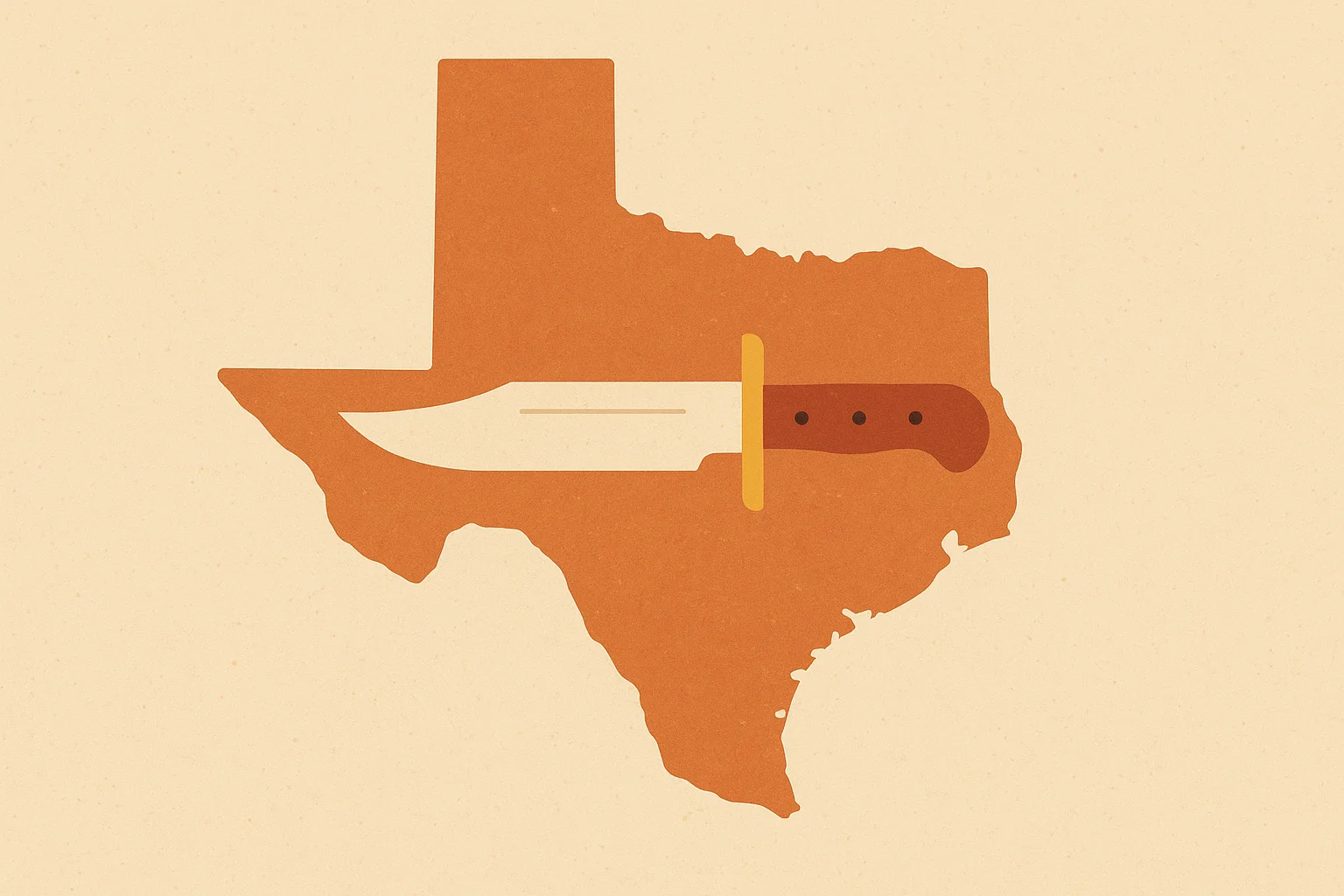
Texas is regularly cited as one of the most knife-friendly states in the country, and that reputation is largely accurate — but it's worth understanding what actually changed and when, since older information about Texas knife law is now out of date.
The 2017 Change
Before September 2017, Texas capped the legal blade length for general carry at 5.5 inches, with anything longer classified as an "illegal knife" in most contexts. House Bill 1935, effective September 1, 2017, removed that blade-length restriction for the vast majority of carry situations, allowing knives of any length to be carried in most public places.
What's Generally Allowed Now
Since the 2017 change, Texas law generally allows knives of any blade length to be carried, openly or concealed, in most everyday public locations — a significant shift from the previous length-capped system, and part of why Texas is now considered one of the more permissive states for knife carry.
Location-Based Restrictions That Still Apply
Even with the length restriction lifted, certain "premises" still restrict "location-restricted knives" (knives with a blade over 5.5 inches) regardless of the general carry rule, including:
- Schools and school-sponsored events.
- Polling places during an election.
- Government courts and government meetings.
- Racetracks.
- Secured airport areas.
- Bars (establishments primarily earning revenue from alcohol sales for on-site consumption).
Knives under 5.5 inches generally aren't affected by this location-based restriction list.
Restricted Categories Regardless of Length
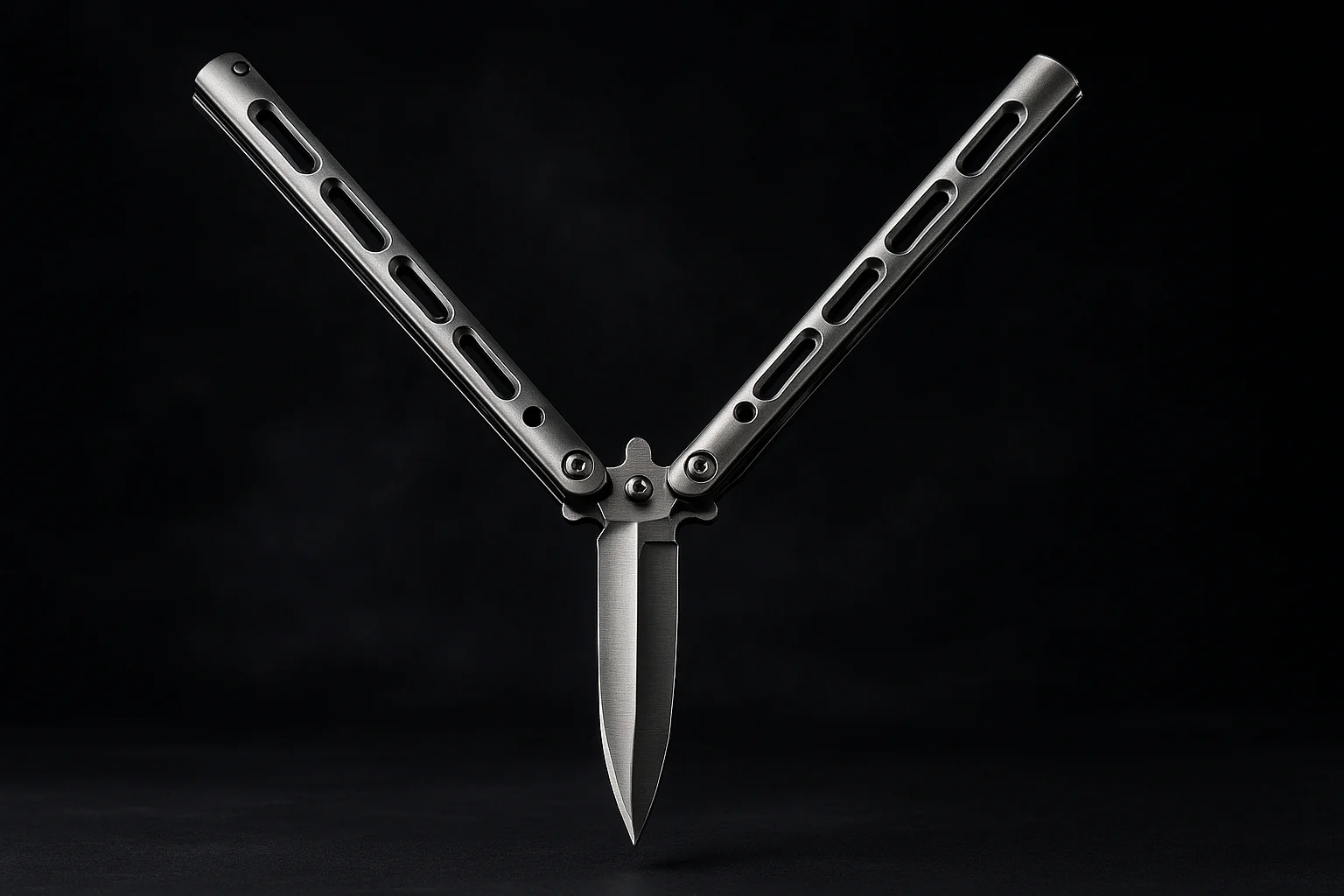
A small number of specific types remain restricted in Texas independent of the general blade-length change, including certain specialty weapons named individually in state statute. Ordinary fixed and folding knives of any length, used for everyday, hunting, or utility purposes, aren't affected by these narrower restrictions.
Why This Matters for Visitors
Someone visiting Texas from a state with stricter length limits may be surprised at how permissive the general rule is — but the location-based restriction list above still applies the same way to visitors as to residents, so it's worth knowing those specific locations regardless of where you're traveling from.
The Practical Takeaway
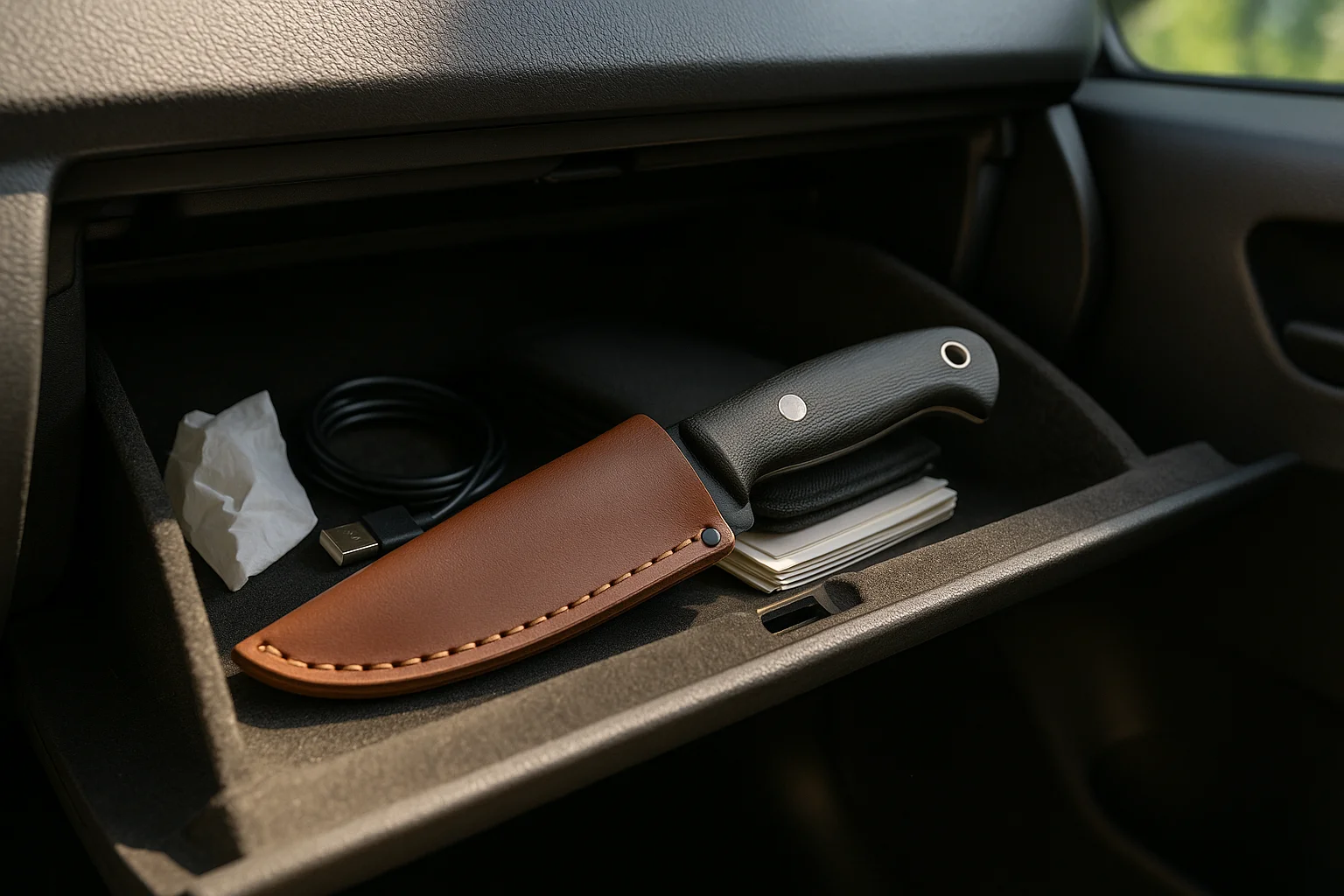
For most everyday carry purposes — an EDC folder, a hunting knife, a fixed blade for outdoor use — Texas law is genuinely permissive. The main thing to actually track is the location-restriction list for larger blades, not a length cap on the knife itself.
This article is general information, not legal advice. Knife laws are subject to change — verify current Texas statute before carrying, particularly around the specific restricted locations listed above.


Comments (0)
No comments yet. Be the first to share your thoughts!
Leave a comment
Your comment will appear after it's reviewed. Your email is never shown publicly.