

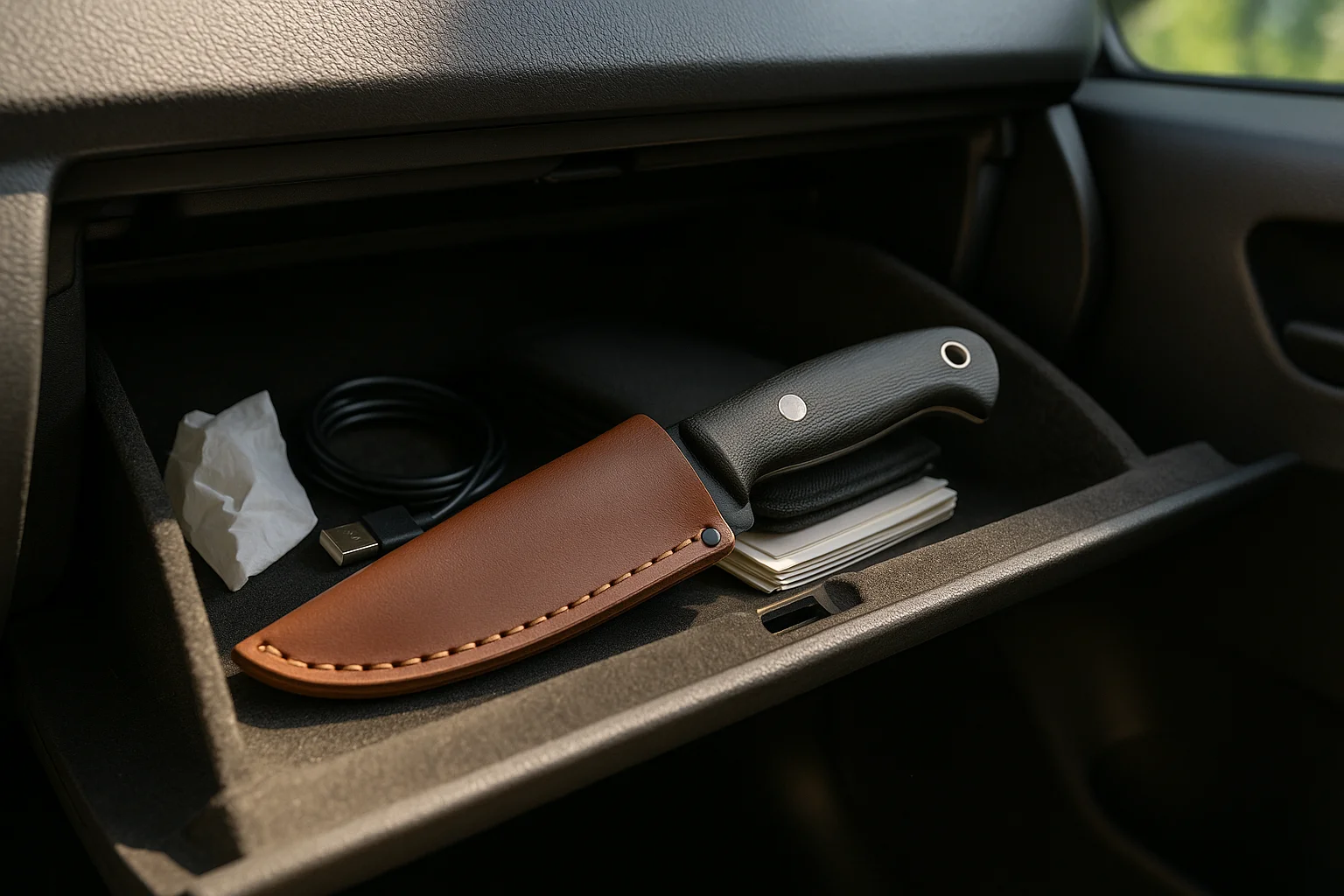
Storing a knife in a vehicle brings in a slightly different set of legal questions than carrying one on your person — and "constructive possession" is a concept that catches a lot of people off guard when a knife in the glovebox turns out to matter more than expected.
Vehicle Storage vs. Personal Carry
Some states treat a knife stored in a vehicle's glovebox, center console, or trunk differently from one carried directly on a person's body, similar to how some firearm laws distinguish vehicle storage from personal carry. This isn't universal, though — in other states, the general knife-carry rules apply the same way whether the knife is on your person or in the car.
What "Constructive Possession" Means
Constructive possession refers to a legal concept where someone can be considered to "possess" an item even without having it directly on their body, if they have knowledge of it and access to it — a knife in a shared vehicle's console, for instance, could potentially be treated as being in the constructive possession of more than one occupant, not just the driver or owner. This matters specifically in situations involving passengers, since a restricted knife item in a shared vehicle could create legal exposure for someone who didn't personally place it there or even know the specifics of local law.
Where This Comes Up in Practice
- Traffic stops, where an officer may become aware of a knife's presence during a search or a voluntary disclosure.
- Shared or borrowed vehicles, where constructive possession questions are more likely to arise among multiple occupants.
- Crossing state lines, where a knife legal to store in a vehicle in one state may not be treated the same way in another.
General Guidance
- Ordinary utility knives — a basic folder, a multitool — generally aren't a significant concern for vehicle storage in most states.
- Larger fixed blades or specifically restricted types warrant more caution, particularly regarding how they're stored and whether local law treats vehicle storage differently from personal carry.
- Be mindful of constructive possession implications if you regularly have passengers in a vehicle where a knife is stored.
- Check both your home state's rules and those of any state you're driving through, since vehicle-storage treatment varies.
The Practical Bottom Line
For most people, keeping an ordinary utility knife in a vehicle for practical purposes — cutting rope, opening packages, roadside emergencies — doesn't raise significant legal concerns in most states. The areas genuinely worth extra caution are larger or specifically restricted knife types, and situations involving passengers or interstate travel where the applicable rules might differ from what you're used to at home.
This article is general information, not legal advice. Vehicle-specific knife storage rules and constructive possession concepts vary by state — verify current local law for your specific situation.


Comments (0)
No comments yet. Be the first to share your thoughts!
Leave a comment
Your comment will appear after it's reviewed. Your email is never shown publicly.