

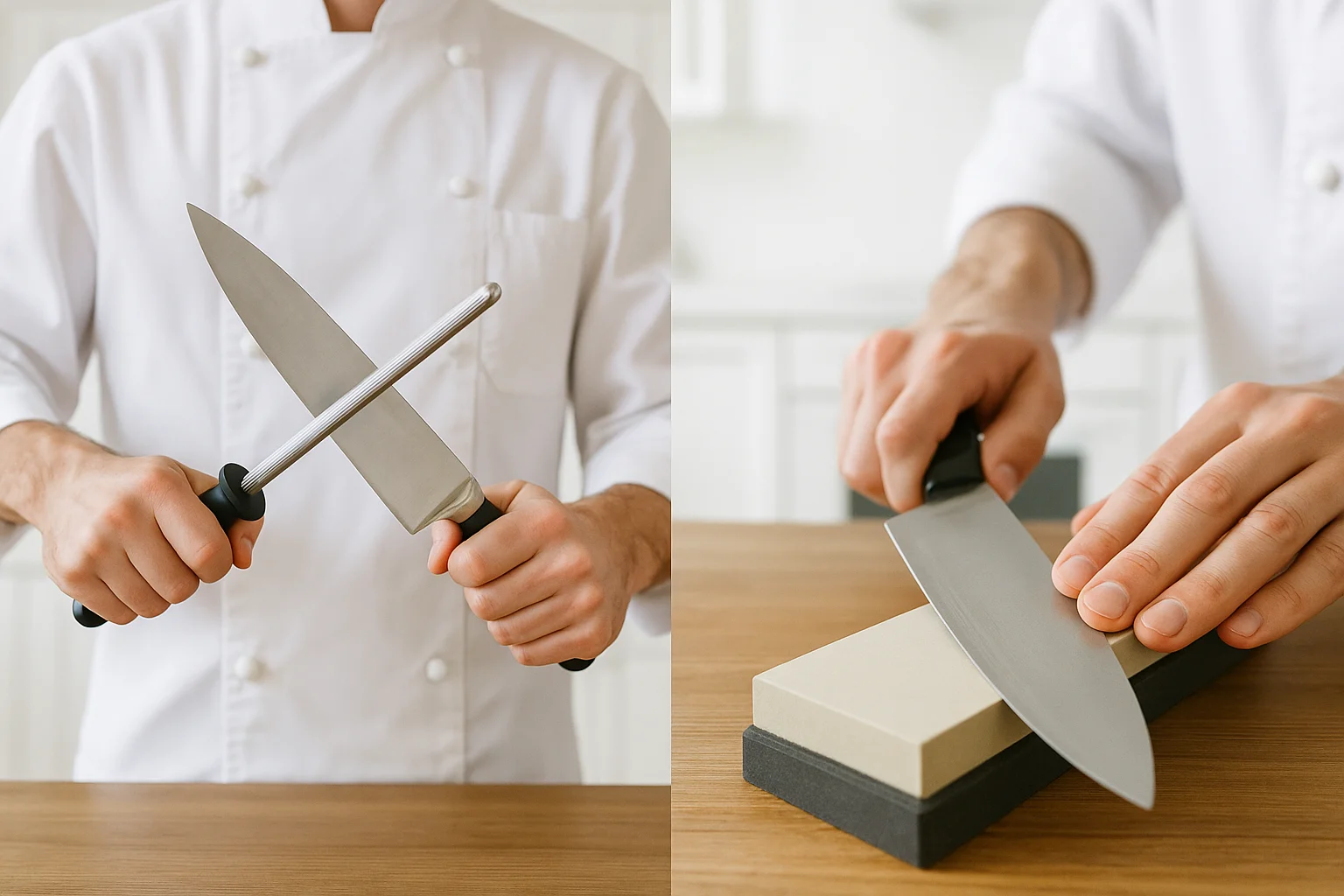
Plenty of people hone their knife every single day and wonder, months later, why it still won't cut a tomato properly. The answer is usually that they've never actually sharpened it — only honed it, over and over, which does something genuinely useful but not the thing a truly dull knife needs.
What Honing Actually Does
With regular use, a knife edge doesn't just get dull — it also rolls, meaning the microscopically thin apex of the blade bends slightly out of line rather than wearing away. A honing rod (often called a "sharpening steel," confusingly) realigns that rolled edge by pushing it back into place. No metal is removed in any meaningful amount; the rod is just straightening what's already there.
What Sharpening Actually Does
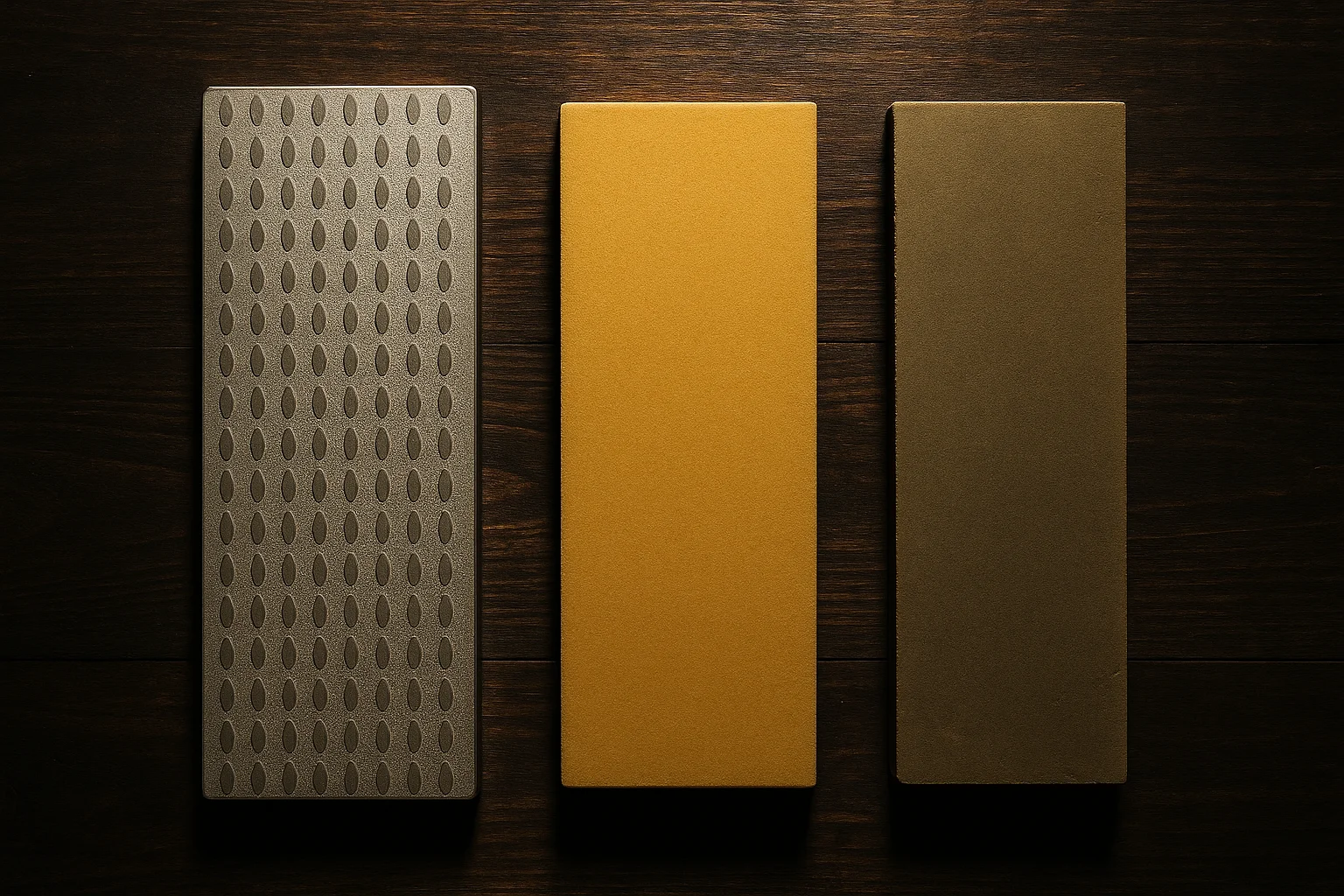
Sharpening uses an abrasive — a stone, a sharpener's wheel, a diamond plate — to grind away metal and rebuild the edge's wedge shape from scratch. This is the only way to restore a blade that's actually dull, as opposed to just misaligned, because dullness at this level means the edge itself has worn down or rounded over and there's no amount of realigning that will fix it.
Why the Confusion Happens
Part of it is language — a honing rod is often marketed and sold as a "sharpening steel," which makes it sound like it sharpens. It doesn't. It's genuinely useful, but it's maintenance, not repair.
A Simple Rule of Thumb
- Hone: before or after most uses, especially with a kitchen knife used daily. Takes seconds and keeps the existing edge performing at its best.
- Sharpen: when honing stops bringing the edge back to a working level — typically every few months for a daily-use kitchen knife, less often for a knife used lightly.
How to Hone Correctly
Hold the rod vertically with the tip resting on a towel or cutting board for stability. Starting at the heel, draw the blade down and across the rod at roughly the same angle it was sharpened at, alternating sides after each stroke. Five to ten light strokes per side is usually enough — honing is not something that benefits from extra force or extra passes.
How to Tell Which One You Need
If a knife still struggles to cut cleanly right after honing, it needs sharpening, not more honing. If it was cutting well yesterday and feels slightly worse today after normal use, a quick hone is probably all it needs. Over-honing a blade that actually needs sharpening won't damage it, but it also won't fix the underlying problem — it just delays admitting the edge needs real work.
Comments (0)
No comments yet. Be the first to share your thoughts!
Leave a comment
Your comment will appear after it's reviewed. Your email is never shown publicly.