

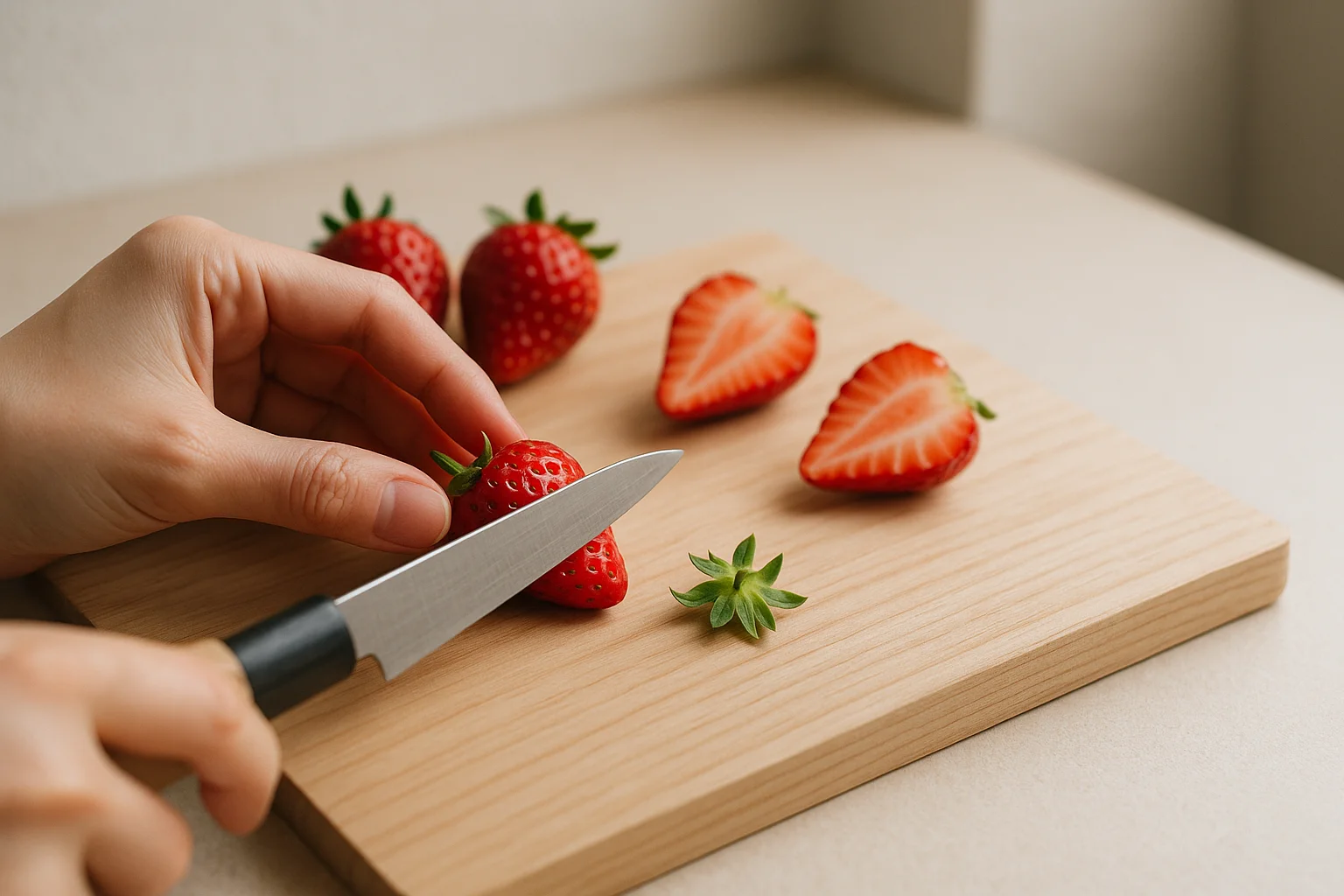
Ask what the Japanese equivalent of a Western paring or utility knife is, and the answer is the petty knife — a slim, general-purpose blade that shows up in nearly every serious Japanese kitchen setup, usually as the second or third knife after a santoku or gyuto.
What Defines a Petty Knife
Typically 3.5 to 6 inches, a petty knife is thinner and lighter than a comparable Western paring or utility knife, ground with the same precision-focused geometry found on larger Japanese blades like the gyuto. The name itself comes from the French "petit" (small), reflecting its role as the compact counterpart to a full-sized gyuto or chef's knife.
What a Petty Knife Is Used For
- Peeling and trimming: the same in-hand tasks a Western paring knife handles, with a thinner, more precise edge.
- Small produce prep: fruits, small vegetables, and garnish work where a full-sized gyuto would feel unwieldy.
- Detail work: deveining shrimp, hulling strawberries, and other fine tasks that benefit from a light, controllable blade.
- Board-based mid-sized tasks: at the longer end of its size range, a petty knife can handle small board work similar to a Western utility knife — slicing a small piece of fruit or cheese.
Petty Knife vs. Paring Knife
The core difference is geometry and steel treatment rather than function: a petty knife's thinner grind and typically harder steel give it a finer, sharper edge than most Western paring knives, at some cost to durability for tougher or more abrasive tasks. If you already appreciate a Japanese-style gyuto or santoku's precision, a petty knife extends that same cutting feel down to smaller tasks; if you're not particular about that distinction, a standard Western paring knife does largely the same job.
Comments (0)
No comments yet. Be the first to share your thoughts!
Leave a comment
Your comment will appear after it's reviewed. Your email is never shown publicly.