A meat cleaver does more than chop bone — here's everything this heavy-bladed knife handles well.
A cleaver's wide, heavy blade looks intimidating next to a slim chef's knife, and it's easy to assume it's a one-trick tool for chopping through bone. In practice, a well-made cleaver earns a permanent spot in the knife roll for reasons that have nothing to do with brute force.
What Makes a Cleaver Different
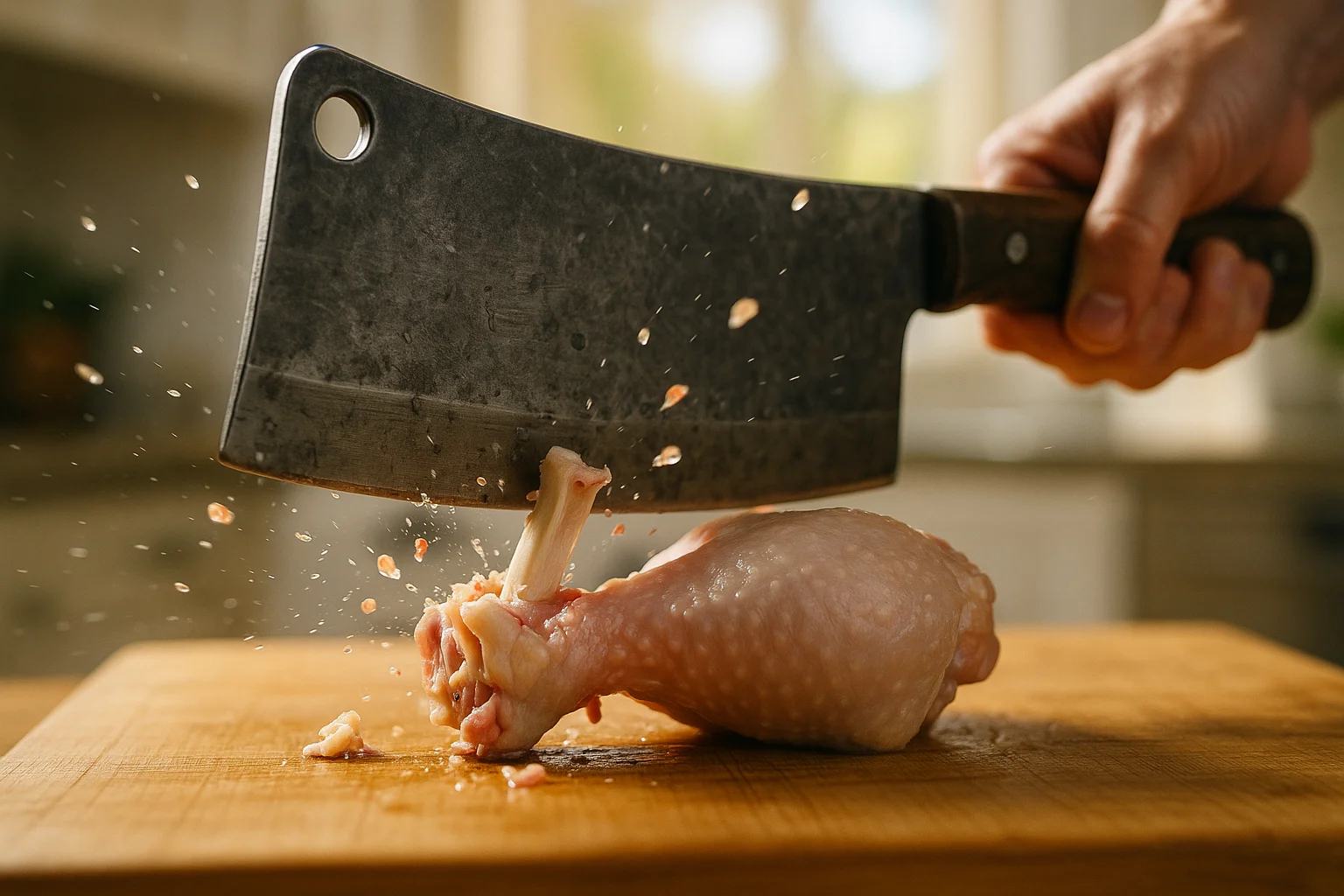
A cleaver's defining features are its wide, rectangular blade and significant weight concentrated forward, which together generate the momentum needed to cut through bone and dense cartilage in a single controlled strike — something a thinner, lighter chef's knife isn't built to do safely or effectively.
Chopping Through Bone and Joints
This is the cleaver's signature job: breaking down poultry joints, splitting ribs, or portioning larger cuts of meat where the blade needs to pass through bone, not just soft tissue. The weight does most of the work — a controlled drop with the cleaver's own mass, rather than muscled force, produces a cleaner cut and is genuinely safer than forcing a lighter knife through the same task.
Everyday Uses Beyond Bone
- Crushing garlic and ginger: the flat side of the blade, pressed down with the heel of your hand, crushes cloves cleanly to loosen the skin or release flavor before mincing.
- Transferring chopped ingredients: the wide blade surface works like a built-in scraper, scooping chopped vegetables from board to pan or bowl in one motion.
- Tenderizing: the flat side can lightly pound thinner cuts of meat, similar to a meat mallet, when precision isn't required.
- Slicing and chopping vegetables: a sharp cleaver handles general vegetable prep capably, particularly for larger, denser vegetables like squash or cabbage where the extra weight helps power through.
Western Cleaver vs. Chinese Chef's Knife (Cai Dao)
What's often sold as a "Chinese cleaver" is really closer to an all-purpose chef's knife in a wide, rectangular shape — thinner and lighter than a true bone-chopping cleaver, and built primarily for slicing, dicing, and mincing rather than heavy bone work. A true heavy cleaver is thicker, harder, and specifically weighted for chopping through bone; check the specs rather than assuming "cleaver-shaped" automatically means "built for bone" — using a lighter Chinese-style chef's knife on bone can chip or damage the edge.
Choosing the Right Cleaver
- For bone-in poultry and general home use: a mid-weight cleaver strikes a reasonable balance between chopping power and everyday maneuverability.
- For heavy butchery or large cuts: a full-weight, thicker-bladed cleaver handles denser bone and larger cuts more safely.
- For general vegetable prep with cleaver styling: a lighter Chinese-style chef's knife covers this well without the extra weight of a true bone cleaver.
Caring for a Cleaver
Because of the more aggressive tasks it's built for, a cleaver typically holds a slightly steeper edge angle than a chef's knife — often 20–25 degrees per side — trading some fine sharpness for the durability needed to survive impact against bone.


Comments (0)
No comments yet. Be the first to share your thoughts!
Leave a comment
Your comment will appear after it's reviewed. Your email is never shown publicly.