Knife restrictions for felons vary sharply by state — here's what to know before you carry.
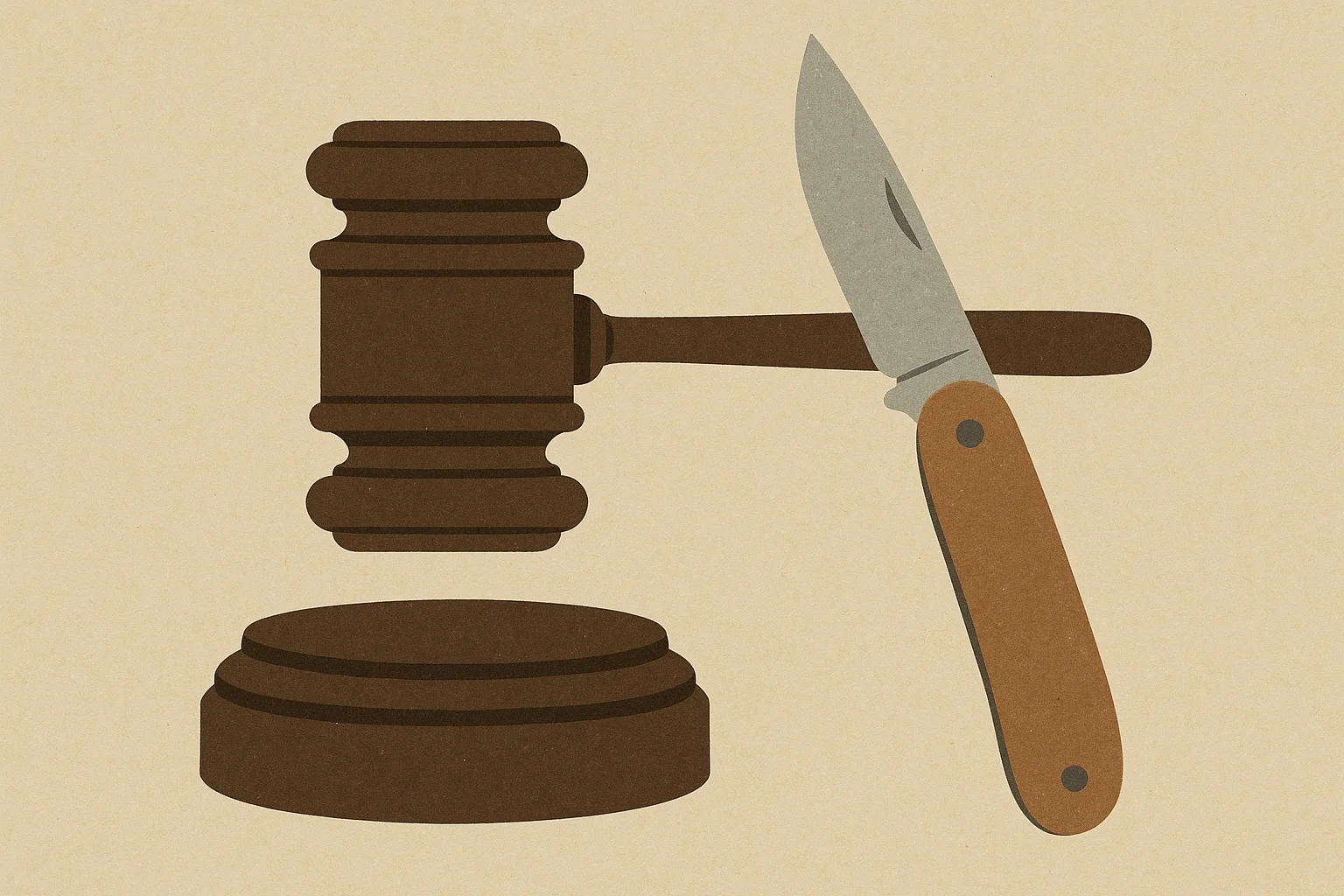
Firearm restrictions for people with felony convictions are governed by a well-known federal framework. Knife restrictions for felons are not — there's no single federal law barring felons from owning or carrying knives, which means the answer depends almost entirely on the specific state (and sometimes the specific underlying conviction).
Quick answer: in most states a felon can legally own and carry ordinary knives, because there is no federal law like the firearm ban that covers knives. A minority of states restrict specific knife types or add penalties for felons, so the answer depends on your state and on the conviction.
Why This Differs From Firearm Law
Federal law imposes a nationwide baseline restriction on felons possessing firearms. No equivalent federal statute exists for knives, so unlike the firearm question — where the federal answer is consistent regardless of state — the knife question genuinely varies state by state, with some states imposing no special felon-specific knife restriction at all and others imposing meaningful ones.
How States Generally Approach This
- No special restriction: some states don't impose any felon-specific knife restriction beyond the general knife laws that apply to everyone.
- Restricted knife types: some states restrict felons (or people with certain violent convictions specifically) from possessing knife types that are otherwise legal for the general public, similar in concept to enhanced weapons restrictions.
- Enhanced penalties: some states don't ban knife possession for felons outright but impose enhanced penalties if a knife is involved in certain subsequent offenses.
- Underlying conviction matters: in some states, the specific nature of the prior felony (violent vs. non-violent) affects whether or how knife-related restrictions apply.
Why This Is Worth Checking Carefully
Because there's no consistent federal baseline to fall back on, this is genuinely one of the areas where "check your specific state" matters more than almost any other knife-law topic — general information about knife carry (blade length, lock type, and so on) doesn't necessarily answer the separate question of felon-specific restrictions layered on top.
Practical Guidance
- Check your specific state's statute for any felon-specific weapons restrictions, not just the general knife-carry rules that apply to everyone.
- Consider consulting an attorney if you have a felony conviction and want clarity on knife possession specifically, given how much this varies and how significant the consequences of getting it wrong can be.
- Be aware that restrictions can sometimes depend on the type of prior conviction (violent vs. non-violent), not just the fact of having one.
If you want a knife that sits comfortably inside these rules, start with a hand-finished folding pocket knife, a classic slip-joint folder, or a compact gentleman's folder from our workshop.
This article is general information, not legal advice, and this is a topic where the stakes of an incorrect assumption are unusually high. If you have a felony conviction and have questions about knife possession, consult a qualified attorney in your state.




Comments (0)
No comments yet. Be the first to share your thoughts!
Leave a comment
Your comment will appear after it's reviewed. Your email is never shown publicly.