

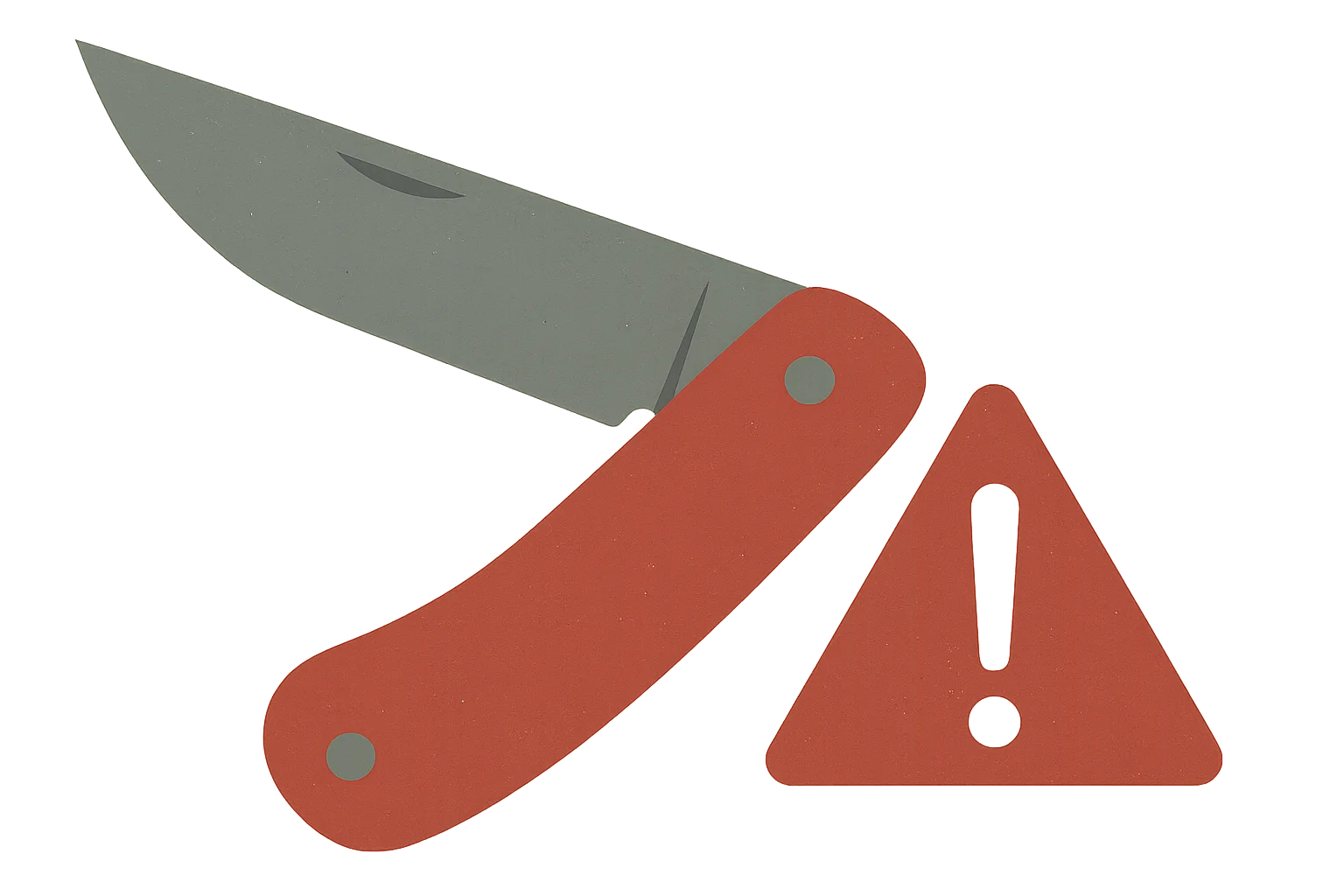
A gravity knife's defining feature sounds simple — it opens using gravity or a flick of the wrist rather than a spring — but that simple definition became the center of one of the more contentious knife-law controversies in recent US history, particularly in New York City.
How a Gravity Knife Opens
Unlike a switchblade, which uses an internal spring to deploy the blade at the push of a button, a gravity knife relies on gravity itself or the momentum from a flick of the wrist to release the blade from the handle and lock it into the open position, without needing a spring mechanism to do the work.
The New York City Enforcement History
For years, New York City interpreted its gravity knife statute broadly enough to include many ordinary folding knives with loose enough pivots that they could technically be flicked open with wrist motion and practiced effort — even knives never marketed, designed, or intended as gravity knives, including many standard EDC folders sold everywhere else in the country without issue. This led to a well-documented pattern of prosecutions against people carrying otherwise completely ordinary pocket knives, based on how easily the specific individual knife could be flicked open rather than its actual design intent.
The 2019 Legal Change
In response to years of criticism over this enforcement pattern, New York passed legislation in 2019 that narrowed the legal definition of a gravity knife specifically to exclude common folding knives not designed or intended to open via gravity or centrifugal force. This was a meaningful shift away from the previous "can it technically be flicked open" standard toward one focused more on the knife's actual design purpose.
Where Gravity Knife Restrictions Still Apply
Knives specifically designed to open via gravity or centrifugal force — as opposed to ordinary folders that could technically be flicked open with effort — remain restricted in several jurisdictions, including under New York's narrowed definition. This is a narrower category than the pre-2019 enforcement pattern covered, but it's still a real legal category worth understanding, particularly for anyone carrying a folder with a notably loose or fast-opening pivot.
Practical Guidance
- A knife specifically designed and marketed to open via gravity or wrist-flick is the category actually intended to be restricted.
- An ordinary manual folder isn't automatically a "gravity knife" just because its pivot happens to be loose enough to flick open — particularly following New York's 2019 clarification.
- Checking current, specific statutory definitions matters more here than in most knife-law categories, given how much this area has shifted.
This article is general information, not legal advice. Gravity knife law has changed meaningfully in recent years — verify current definitions in your specific state before carrying.
Comments (0)
No comments yet. Be the first to share your thoughts!
Leave a comment
Your comment will appear after it's reviewed. Your email is never shown publicly.